CBD Microdosing: Finding Your Minimum Effective Dose
Read: ~9 min, Cloud Store CBD practical guide — the method for precise dosing, without waste.
Are you new to CBD, and the first question that comes to mind is always the same: "How much should I take?" The natural reflex would be to take a higher dose to "really feel the effect." That's exactly the mistake to avoid. With CBD, the correct approach is the opposite: start low and look for the smallest amount that works for you. That's microdosing.
Specifically, CBD microdosing involves taking small doses — around 1 to 5 mg per dose — and gradually increasing until you find your "sweet spot." The goal isn't the strongest dose, but the sufficient dose. You benefit in two ways: you respect your body better, and you don't waste product (and money).
First, a word to clear up a common confusion: in French, "microdosage" mostly refers to psychedelics (LSD, mushrooms). Here, it's completely different. Unlike these substances, CBD is not psychoactive: it doesn't get you high, it's legal in France (THC < 0.3%), and CBD microdosing simply aims for daily relaxation and comfort, not any kind of "experience." We're talking about a wellness molecule, not a drug.
Key takeaways in 5 points
- More CBD ≠ more effect. The response to CBD follows a bell curve: beyond a certain dose, you gain nothing — sometimes the opposite.
- Start low, go slow. Begin around 1 to 5 mg, increase in small increments every 3 to 4 days.
- Give it time. Stay at a stable dose for 1 to 2 weeks before judging, and note your feelings in a journal.
- Format matters. Sublingual oil (under the tongue) is the most precise and consistent format for microdosing.
- Microdosing ≠ medical dose. The very high CBD doses validated by science are only for medical use, for rare diseases. Nothing to do with wellness use.
What you'll find in this article
What exactly is CBD microdosing?
Microdosing means using the minimum effective dose: the smallest amount of CBD that produces the feeling you're looking for (relaxation, a sense of calm, help winding down at the end of the day). Instead of aiming for "a lot," you aim for "just enough."
Why does this approach make sense? Because everyone reacts differently. Your weight, your metabolism, your individual sensitivity, the time of day you take it, whether you've eaten or not: all of this varies the dose that suits you. There is no universal dose, and that's precisely why a progressive titration method — starting low and adjusting — is better than any "magic number" found on a forum.
Microdosing is also an exercise in listening to your body. Many users report that a small, regular dose suits them better than a large, occasional dose. This isn't a promise — it's common sense, which science also illuminates, as we'll see shortly.
Why "more" doesn't mean "better"
This is the most counter-intuitive, and most important, point. We all intuitively think that doubling the dose would double the effect. For CBD, this is false. The relationship between dose and feeling doesn't increase in a straight line: it follows a bell curve (scientists refer to it as an "inverted U-shaped curve"). In other words, the effect increases, reaches a peak, then… plateaus or decreases if you continue to increase the dose.

This is not an abstract concept. Two clinical studies conducted by Brazilian university teams (Crippa, Zuardi, Guimarães) tested the effect of CBD on anxiety related to public speaking, with several doses compared to a placebo. The result is striking: the intermediate dose of 300 mg gave the best result — better than 600 mg, better than 900 mg (Zuardi et al., 2017; Linares et al., 2019). The higher doses did not perform better; on the contrary.
The lesson for you, at your wellness level, is clear: taking a higher dose is useless, even counterproductive. There's a window where it works for you, and exceeding it serves no purpose (other than consuming your bottle faster). The whole art of microdosing is to find this window by starting low — without foolishly exceeding it.
The titration method, step by step
"Titrating," in practice, simply means adjusting your dose in small increments until the right setting is found. Here's a simple, cautious method that works for most people.
The 4 steps of microdosing
- 1. Start very low. Begin around 1 to 5 mg per dose (we'll see below how to count in drops). At this stage, the goal isn't to "feel" a strong effect, but to observe how your body reacts.
- 2. Be consistent. Maintain the same dose for 3 to 4 days, ideally at the same time of day. Consistency matters more than quantity.
- 3. Increase incrementally. If after a few days you feel nothing, increase by a small notch (e.g., +1 to 2 mg), then observe again. Increase slowly, never all at once.
- 4. Stop at the right window. As soon as you achieve the desired feeling, you stay there. There's no need to keep increasing: you've found your minimum effective dose.
The classic pitfall is impatience. Ingested CBD doesn't have a spectacular effect in five minutes; its benefit is more of a subtle, long-term action. Hence a golden rule: allow at least 1 to 2 weeks at a stable dose before concluding that it's not right for you. Many people give up too soon or increase too quickly, missing their optimal setting.
Keep a mini tracking journal
This is the most effective trick for finding your dose without blindly fumbling. On your phone or in a notebook, note for each dose: the date, the dose (in mg or drops), the time, and your feeling out of 5 (relaxation, sleep, comfort…). In one to two weeks, the trend will be obvious, and you'll pinpoint your optimal window in black and white.
The format changes everything: sublingual, ingested, inhaled
For the same dose, you won't feel the same effects depending on how you take CBD. The reason lies in bioavailability: the fraction of CBD that actually reaches your bloodstream, and the speed at which this happens. This is a point where a lot of approximate figures circulate, so let's stick to what's solid.
| Format | Onset time | What you need to know |
|---|---|---|
|
Sublingual (oil under the tongue) |
15 to 45 min | The king of microdosing formats: hold the oil under the tongue for ~60 sec, a portion passes directly into the bloodstream. Precise to the drop, consistent. |
|
Ingested (capsules, edibles, swallowed oil) |
30 min to 2 h | Must pass through digestion and the liver: slower onset, lower absorbed fraction, but longer effect. Convenient but less precise for titration. |
|
Inhaled (flower, vape) |
a few minutes | The route with the best-documented bioavailability (around 30% measured in humans) and the fastest, but also the shortest. Less suitable for fine-tuning dosage to the milligram. |
An honest clarification: in scientific literature, only the inhaled route has a truly measured bioavailability in humans (around 30%, reviewed by Millar et al., 2018). The very precise percentages often cited for sublingual or oral administration are mostly estimates. What we can say without error is that sublingual partially bypasses digestion, which makes it more consistent and easier to dose precisely than ingested forms — hence its status as the preferred format for microdosing.
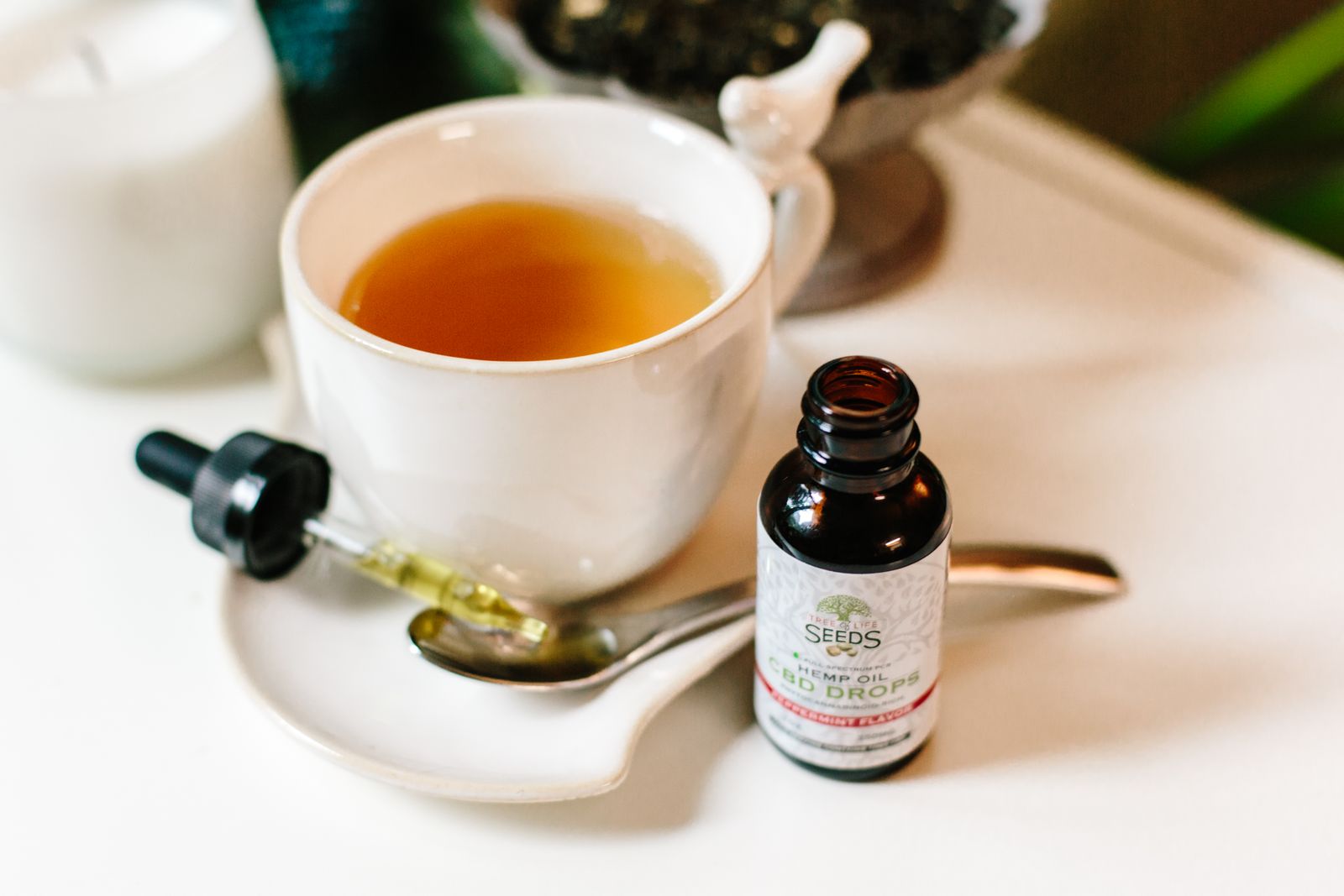
Practically speaking, how do you convert milligrams to drops? It depends on the concentration of your CBD oil. The rule: look at the total number of mg and the bottle volume to estimate mg per drop (one drop ≈ 0.05 ml). With a well-dosed oil, a few drops are more than enough to stay within the microdosing range. If in doubt, start with 2 drops and adjust. For more in-depth calculations, we have a dedicated guide: CBD oil: dosage, how many drops, and how to consume it.
Micro, common, medical: three scales not to be confused
On the internet, you sometimes come across enormous CBD doses, which can be alarming or encourage overdosing. It's important to understand that we're actually mixing three completely different worlds. Visualizing them side by side clarifies everything.

| Scale | Typical Dose | Context |
|---|---|---|
| Microdosing | 1 to 5 mg per dose | Seeking the minimum effective dose, daily wellness use. |
| Common wellness use | often less than 50 mg / day | Regular sublingual oil consumption. Remains for comfort use. |
| Medical setting (Epidyolex®) | up to 20 mg / kg / day | Prescription medicine, reserved for rare epilepsies. That's ~1000 mg/day for 50 kg: completely unrelated to wellness use. |
This contrast is important. The only massive doses of CBD scientifically validated are within a strict medical framework, as medication, for serious illnesses (reviewed by Larsen & Shahbazi, 2020). This has nothing to do with placing a few drops under your tongue in the evening. For wellness use, aiming for "always more" makes no sense: your place is at the very bottom of the scale, and that's perfectly fine.
Safety: what to check before starting
Wellness CBD is generally well tolerated, but some precautions are necessary — and it's precisely the role of a reputable store to remind you of them.
Read before starting
- Drug interactions. The ANSM reminds that combining CBD with certain treatments is never trivial (anticoagulants, antidepressants, antiepileptics, certain anxiolytics, among others). CBD can modify how the liver metabolizes other molecules. If you are on medication, talk to your doctor or pharmacist before using CBD.
- Pregnancy and breastfeeding. CBD is not recommended as a precaution.
- It is not a medicine. CBD does not treat, cure, or heal any disease. This guide is informative; it does not replace medical advice.
Regarding the product itself, the rule of caution aligns with our values. Opt for natural CBD from hemp, with a THC content below 0.3% (the legal limit in France) and an available certificate of analysis. Also, be wary of synthetic cannabinoids (HHC, H4CBD, HHCPO, THCP): these are not CBD, their safety profile is poorly understood, and we reject them on principle. Microdosing only makes sense with a product whose composition you know precisely.
Finally, remember that CBD acts gently. Starting low is also the best way to avoid the rare side effects of too strong a dose (temporary fatigue, dry mouth, mild digestive issues). Microdosing is, by design, the safest approach available.
FAQ
What does CBD microdosing mean?
How many mg of CBD to start with?
Does taking more CBD result in a stronger effect?
How long does it take to feel the effects of microdosing?
Is CBD microdosing like microdosing mushrooms or LSD?
Which format should I choose for microdosing?
- Linares I.M. et al., "Cannabidiol presents an inverted U-shaped dose-response curve in a simulated public speaking test", Brazilian Journal of Psychiatry, 2019.
- Zuardi A.W. et al., "Inverted U-Shaped Dose-Response Curve of the Anxiolytic Effect of Cannabidiol during Public Speaking in Real Life", Frontiers in Pharmacology, 2017.
- Millar S.A. et al., "A Systematic Review on the Pharmacokinetics of Cannabidiol in Humans", Frontiers in Pharmacology, 2018.
- Larsen C., Shahbazi J., "Dosage, Efficacy and Safety of Cannabidiol Administration in Adults: A Systematic Review of Human Trials", Journal of Clinical Medicine Research, 2020.
- ANSM, "Mixing CBD and medications is never harmless", 2025; Conseil d'État, decision on CBD sales, December 29, 2022.
Informative article updated in 2026. The doses cited are general guidelines, not a prescription. Cloud Store CBD applies THC < 0.3% and rejects synthetic cannabinoids.
Cloud Store CBD is a CBD brand based in Charente. This article is an informative guide: it makes no health claims and is not a substitute for medical advice. CBD is not a medicine; if you are undergoing treatment, talk to your doctor or pharmacist.