
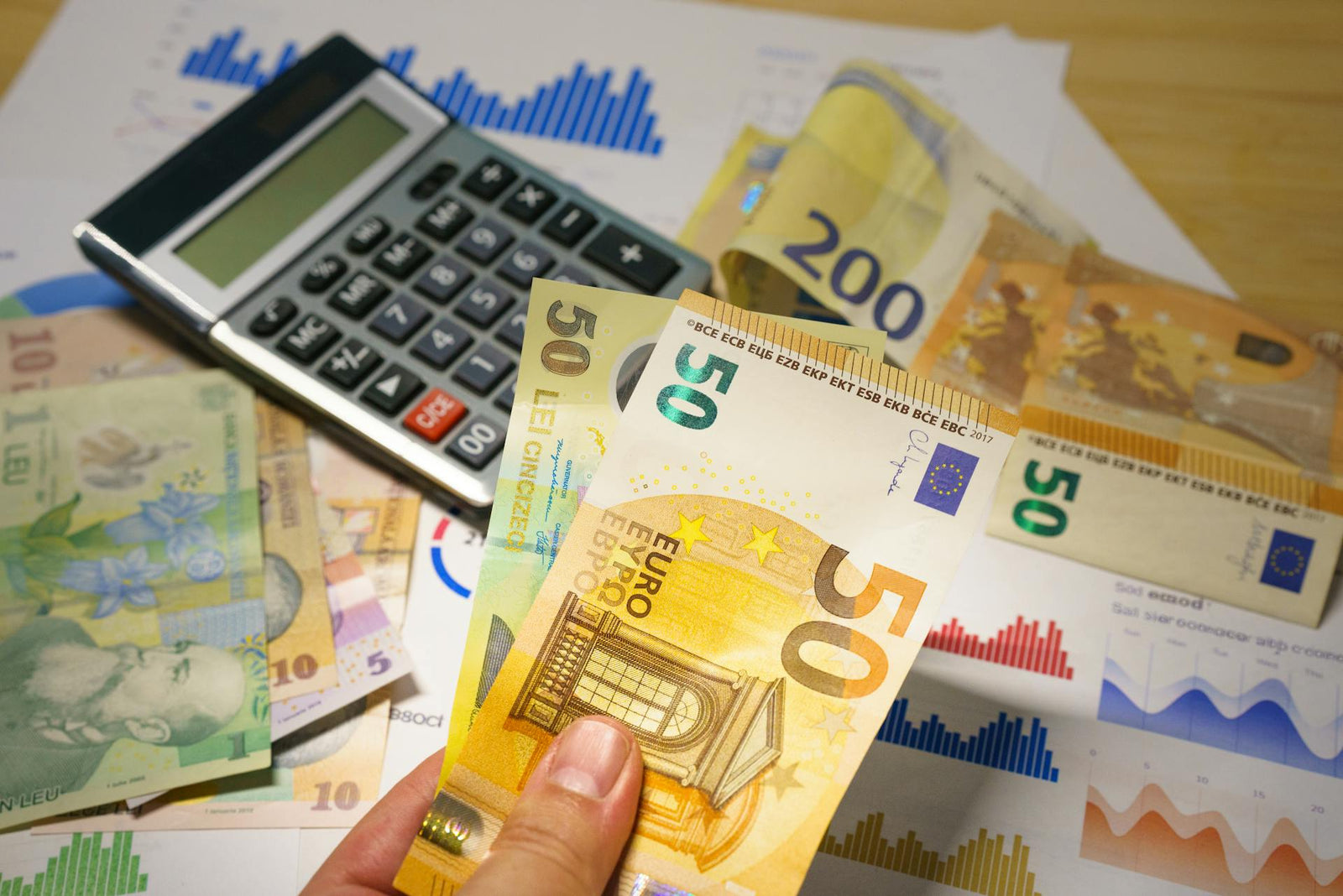
CBD Price France vs Switzerland, Italy, Spain in 2026: what official figures really show
Read: ~9 min, sourced Cloud Store CBD comparison.
You are comparing two CBD flowers: same variety, roughly the same cannabinoid content, and yet the first costs €8/g on a French site while the second is listed at €3/g on an Italian site and 12 CHF/g on a Swiss site. You’re wondering if you’re overpaying, or if the cheaper offer is hiding something. That’s a good question.
This guide lays out the numbers with official sources: Conseil d'État, OFDT, Swiss Federal Office of Public Health (OFSP), Italian Gazzetta Ufficiale, Spanish AEMPS framework, and the CJEU Kanavape ruling. No extrapolation. With the nuances that change everything, such as the Spanish situation where the sale of flowers for ingestion remains prohibited, despite sites claiming otherwise.
The goal is not to defend the French market at all costs. It is to understand why the gaps exist and when a low price signals a good deal or a red flag.
Quick Answer
• France: indoor flowers €5 to €12/g, legalization confirmed by the Conseil d'État (December 29, 2022), 0.3% THC threshold.
• Switzerland: flowers 7 to 15 CHF/g, unique threshold in Europe at 1% THC (OFSP), mature industry but products non-compliant in France.
• Italy: flowers €2 to €12/g under Legge 242/2016, but the 2025 Security Decree attempted to equate inflorescences with narcotics. Decree suspended by the Italian Council of State in late 2025, merits hearing in May 2026. Legal status in limbo — maximum vigilance for cross-border purchases.
• Spain: structured gray zone. CBD cosmetics are legal, flowers and supplements tolerated in shops but without an official commercial framework — the AEMPS considers oral CBD an unauthorized medicine. Royal Decree 903/2025 introduced medical cannabis in hospital pharmacies. No cross-border bargain for France.
• The 0.3% THC threshold applies in France to the finished product: Swiss CBD at 1% THC is non-compliant and can cause issues during checks.
What are the average CBD prices in Europe in 2026?
Here are the ranges observed in early 2026 on the main online shops and physical points of sale in each country. Prices refer to CBD legal under local law: less than 0.3% THC in France and the EU, less than 1% in Switzerland.
| Product | France | Switzerland | Italy | Spain (cosmetic) |
|---|---|---|---|---|
| Indoor flower (€/g) | €5 – €12 | 7 – 15 CHF | €3 – €12 | Outside mass market |
| Greenhouse flower (€/g) | €3 – €7 | 5 – 10 CHF | €2 – €6 | Outside mass market |
| CBD hash (€/g) | €4 – €10 | 6 – 14 CHF | €3 – €9 | Outside mass market |
| CBD oil 10% (10 ml) | €40 – €80 | 60 – 120 CHF | €30 – €70 | €30 – €70 (cosmetic) |
| Legal flower framework | Legal (CE 2022) | Legal < 1% THC | Legal < 0.2% (Legge 242/2016) | Cosmetic legal · flowers tolerated gray zone |
For context: according to the OFDT (2025 Trends report), illegal cannabis in France sells for an average of €10/g for herb and €8/g for hash. Legal French CBD is therefore in the same price range as the parallel market cannabis, with two essential differences: traceability and compliance with the 0.3% THC threshold.
Why does CBD cost what it costs in France?
The French market was legally stabilized by the December 29, 2022 decision of the Conseil d'État, which annulled the general ban on the sale of low-THC flowers and leaves. All CBD products sold in France must contain less than 0.3% THC, according to the decree of December 30, 2021. For details on the framework, see our complete guide to legal CBD in France.
This compliance has a real cost. French operators must ensure traceability from the field to the consumer, fund regular laboratory analyses, declare their crops, and invest in knowledgeable customer service. These items represent a significant portion of the final price. Added to this are the 20% VAT and the usual business costs, without any tax advantages specific to the CBD sector.
The result: a French indoor CBD flower is priced between €5 and €12/g, with a median around €7-€8/g on serious online shops. For comparison, illegal cannabis sold in France averages €10/g (herb) and €8/g (hash) according to the 2025 OFDT. Legal CBD is therefore not significantly more expensive than the parallel market, while offering traceability, COAs, and compliance.
Why is Swiss CBD more expensive?
Switzerland is a European pioneer in CBD. Since 2011, federal law has authorized the marketing of cannabis containing less than 1% THC, a threshold more than three times higher than the French ceiling. The Federal Office of Public Health (OFSP) oversees the industry. According to the 2025 Chambers guides, over 15% of cannabis consumers in Switzerland now turn to CBD.
Several structural factors explain the higher prices: significantly higher cost of living, expensive labor, demanding indoor production standards, and rigorous environmental control (light, humidity, nutrition). A Swiss indoor CBD flower generally sells for between 7 and 15 CHF/g, with visual and aromatic quality that serves as a benchmark for many neighboring markets.
⚠ Caution: Swiss CBD is not legal in France
The 1% THC threshold authorized in Switzerland makes Swiss CBD products non-compliant with the 0.3% ceiling imposed in France. A French consumer who buys Swiss CBD online and has it delivered to France is exposing themselves to an illegal product on French soil, and to risks during roadside checks. Always check the product's COA and declared THC threshold before making a cross-border purchase.
Is Italy really the land of cheap CBD?
Italy was long considered the Eldorado of cheap European CBD. Legge 242/2016 legalized the cultivation of industrial hemp with less than 0.2% THC (with a field tolerance of 0.6%), creating a sector estimated at 2 billion euros, roughly 3,000 businesses, and over 15,000 jobs. Italian flowers sell for between €2 and €12/g depending on the segment.
The legal situation is currently in limbo. The Security Decree adopted in April 2025 (stemming from the June 2024 security law) attempted to equate hemp inflorescences with narcotics by listing them in section B of the pharmaceutical tables. The Consiglio di Stato (Italian Council of State) suspended the application of this measure on December 15, 2025, following a class action lawsuit by professional organizations. A merits hearing is scheduled for May 7, 2026; as long as this decision is not rendered, the industry continues to operate within its 2016 framework, but under active regulatory threat. Furthermore, the decision of the United Sections of the Court of Cassation (no. 30475/2019) remains the reference regarding the marketing of inflorescences.
Practical consequence for a French buyer: Italian sellers present in the French market operate in a legally unstable framework, and the price differential may be explained by this gray zone rather than by productive efficiency. Italy nonetheless remains a major agricultural hemp producer that supplies part of the European B2B market — many French shops source there after quality control and reconditioning to the French 0.3% THC standards.
What do you really need to know about the Spanish market?
We often hear that cannabis is "legal in Spain" because of Cannabis Social Clubs and tolerance for private use. Commercially, however, this is not the case: the sale of herb or hash remains criminally repressed, just like in France. What is tolerated is private use at home (up to about 50g according to case law) and consumption among members of associations, without commercial transactions. CBD follows the same logic: no explicit legal framework, but broad tolerance for formats that do not trigger "medicine" qualification.
Spain therefore practices a legal model unique in Europe: no explicit legal framework for non-cosmetic CBD, but broad commercial tolerance for twenty years. Concretely, the situation is multi-layered:
- CBD cosmetics (creams, balms, topical oils) are legally marketable without restriction, under standard European cosmetic regulations.
- CBD flowers are sold "for collection" or "ornamental/aromatic purposes," not for consumption. The AEMPS (Agencia Española de Medicamentos y Productos Sanitarios) considers that any sale "for ingestion" falls under the category of medicine and has not issued authorization. In practice, thousands of CBD shops operate in this tolerated gray zone, locally regulated.
- Ingestible CBD oils and dietary supplements follow the same logic: sold in parapharmacies and specialty stores at less than 0.2% THC, without therapeutic claims.
- Royal Decree 903/2025 (October 7, 2025) introduced a formal framework for medical cannabis via magistral formulas in hospital pharmacies — a first step toward clearer regulation, but distinct from the mass-market CBD sector.
Catalan cannabis social clubs operate on an even more distinct principle (private non-commercial consumption among resident members), unrelated to online sales.
For a French consumer, buying in Spain via a site that delivers to France offers no particular advantage: French legislation (THC < 0.3%) is more permissive on the threshold than the Spanish one (0.2%), shipping times are identical or even longer, and Spanish COAs rarely target French standards. Regarding cosmetics, however, the Spanish offering is mature and competitive.
Why do prices vary so much from one country to another?
Five main factors explain the gaps.
1. The energy cost of indoor cultivation. Southern countries benefit from abundant greenhouse conditions, even outdoor crops. France and Switzerland, with harsher climates, depend more on indoor cultivation, which is more energy-intensive.
2. Legal standards and compliance. The stricter the THC threshold, the more expensive analyses and varietal selection become. France at 0.3% requires more batch analyses than Italy at 0.2% with a 0.6% tolerance, which in turn requires more than Switzerland at 1%.
3. Production volume. Italy has a mature, large-scale industrial hemp sector. France is gaining momentum (leading European producer in surface area, 23,600 ha in 2024 according to InterChanvre), but a portion is intended for fiber and seeds. See our guide on hemp cultivation in France.
4. Import/export circuits. The CJEU Kanavape ruling (C-663/18, November 19, 2020) established that a Member State cannot prohibit the marketing of CBD legally produced in another Member State. Concretely: European free movement applies, but the 0.3% THC threshold remains valid at the final point of sale in France.
5. Distribution margin. Serious shops invest in analyses, labeling, customer service, and restock. Low-cost shops reduce these items, which is then reflected in the COAs (sometimes absent) and product quality (often variable).
Where to buy according to your goal?
Three priority profiles, three purchasing logics.
Lowest price priority. Comparison sites dangle Italy or Spain, but the risk is threefold: doubtful THC compliance, often absent COAs, and fragile legal status of the vendor (Italy post-Decreto Sicurezza, Spain outside the AEMPS framework). The difference of a few euros per gram can end up costing dearly in the event of a check or a non-compliant product.
Premium quality priority. Switzerland remains a benchmark, but it is incompatible with the French 0.3% THC framework. To remain in France, many producers now offer high-end indoor flowers at €8-€12/g, with cultivation standards comparable to the best Swiss batches.
Legal safety and peace of mind priority. Buy in France from an operator who publishes their COAs, declares their batches, and works with identified European producers. This is generally between €5 and €9/g for an indoor flower, and it is the serenity-to-price ratio that holds up best over time.
The right habit before buying
Always request the COA (third-party certificate of analysis) for the batch. Check for: actual CBD content, THC compliance < 0.3% in France, and the absence of pesticides, heavy metals, and residual solvents. For athletes subject to anti-doping tests, see our CBD and sports guide. For a detailed breakdown of how to read a CBD label, see our buying guide.
Why can a CBD flower cost €3 as well as €12 per gram?
The price gap is rarely arbitrary. Several parameters determine the actual price of a flower, and understanding them helps you judge whether a shop is reliable or not.
Cultivation method. An indoor flower (4-5 month cycle under lamps, humidity control) costs two to three times more to produce than a greenhouse flower (semi-natural) or outdoor flower (dependent on the season). For the same volume, an indoor producer amortizes more fixed costs per gram produced.
Cannabinoid content. A flower with 18-22% CBD justifies a higher price than one with 8-12%, as the cannabinoid yield per gram purchased is better for the end consumer. Verify the percentage on the COA, not just on the product sheet.
Terpene profile. Flowers rich in terpenes (myrcene, limonene, beta-caryophyllene, linalool) have a more complex aromatic profile and a more distinct consumption experience. Producers who invest in varietal selection and careful curing charge for this work.
Post-harvest processing. Slow drying, curing in jars for several weeks, hand-trimming: these are all steps that distinguish a premium flower from a generic one. A poorly dried €3/g outdoor flower might seem like a bargain until the moment you use it.
The Cloud Store CBD position
Cloud Store CBD is a French retail brand based in the Charente region that selects its products from two partner French producers. Our approach rests on three points: products that are 100% compliant with 0.3% THC, third-party COAs available for every batch, and a categorical refusal of synthetic cannabinoids (HHC, H4CBD, THCP, “CBD+”), which are often sold cheaper but are now classified as narcotics by the ANSM (June 2025 alert).
Our pricing strategy focuses on the balance between peace of mind and cost: indoor flowers between €5 and €9/g, resins between €4 and €8/g, and 10% oils at €39-49. We are neither the cheapest on the market nor the most expensive. It is the fair price for a product whose traceability is sustainable. For a guide to understanding oils, see our practical dosage guide.
There are two ways to pay less without compromising on quality. Small buds—those smaller nugs separated during caliber sorting—cost much less for the same genetics: our Small Bud Gelato works out to €1 per gram in a 25g format. And to sample several varieties before investing in a large format, our discovery packs include 1.5g of each flower and resin.
This framework applies to retail purchases. If you are a professional—a shop, e-commerce site, tea room, or hotel—the price structure is different: it is based on bulk and volume thresholds, with a replenishment logic rather than one-off purchases. Our conditions in this case are detailed on our CBD wholesaler for professionals page.
Discover our French CBD flowers and resins, which are traceable, compliant, and priced fairly.
View our CBD flowersFAQ — CBD prices in France and Europe
Why is French CBD more expensive than in Italy?
The French 0.3% THC threshold requires more batch analysis and varietal selection than in Italy, where the threshold is 0.2% with a 0.6% field tolerance. Added to this are 20% VAT, social charges, and COA traceability, all of which are reflected in the final price. The difference is measured more in legal peace of mind than in the intrinsic value of the product.
Is Swiss CBD really of better quality?
Switzerland has a mature industry with high indoor standards. However, French quality has improved significantly since 2022, and several producers now offer indoor flowers of comparable quality at €8-12/g. Most importantly, the Swiss 1% THC threshold makes these products non-compliant in France, which nullifies any potential quality advantage for a French consumer.
Can I buy Spanish CBD for personal consumption?
The situation is in a gray area. The AEMPS considers oral CBD and flowers "for ingestion" as medicinal products without authorization, and therefore not marketable in that manner. However, flowers are widely sold "for collection" and oils are sold in specialized shops without therapeutic claims—this is tolerated within Spanish territory. For a French consumer buying remotely, the advantage is slim: the THC threshold is stricter (0.2% vs 0.3% in France), and COAs are not always aligned with French standards. Spanish CBD cosmetics, however, are perfectly legal on both sides of the border. Furthermore, Royal Decree 903/2025 introduced a medical cannabis framework in hospital pharmacies, distinct from the mass-market CBD trade.
What is the average price of a CBD flower in France in 2026?
A French indoor flower is priced between €5 and €12/g, with a median around €7-8/g at reputable online shops. Greenhouse flowers are generally found between €3 and €7/g. The price differences are explained by the cultivation method, cannabinoid content, terpene profile, and post-harvest labor (curing, trimming).
Does legal CBD cost more than cannabis on the black market?
Not really. According to the OFDT (2025 Trends report), illegal cannabis in France sells on average for €10/g for weed and €8/g for resin. Legal French CBD is in the same price range, with the added benefits of COA traceability, compliance with the 0.3% THC limit, and the absence of psychotropic effects. The practical price difference is zero; the legal difference is absolute.
Is buying CBD in Italy or Spain for delivery to France a good idea?
Not really. The CJEU's Kanavape decision (2020) guarantees free movement, but the product must respect the 0.3% THC limit at the final point of sale in France. Foreign low-cost shops often offer products without reliable COAs, sometimes adulterated (2025 ANSM alert). Saving a few euros can end up being costly in the event of an inspection or a non-compliant product.
Useful sources
Council of State — Cancellation of CBD flower ban (December 29, 2022) (accessed May 5, 2026)
Légifrance — Order of December 30, 2021 (THC < 0.3%) (accessed May 5, 2026)
OFDT — Retail prices of narcotics since 2010 (2025 Trends) (accessed May 5, 2026)
Swiss Federal Office of Public Health (FOPH) — Cannabis (accessed May 5, 2026)
Italian Official Gazette — Law 242/2016 (cannabis light) (accessed May 5, 2026)
Italian Court of Cassation — Sezioni Unite No. 30475/2019 (cannabis light) (accessed May 5, 2026)
CMS Law / AEMPS — Cannabis framework in Spain (accessed May 5, 2026)
CJEU — Kanavape Ruling C-663/18 (November 19, 2020) (accessed May 5, 2026)
ANSM — Cannabinoids added to the list of narcotics (June 2025) (accessed May 5, 2026)
⚠ Important note: the prices indicated are market ranges as of early 2026 and may change rapidly. This article does not constitute legal advice or an inducement to purchase CBD that is non-compliant with French legislation. For any cross-border order, always verify the COA, the declared THC percentage, and the product's compliance with the 0.3% threshold in force in France.