
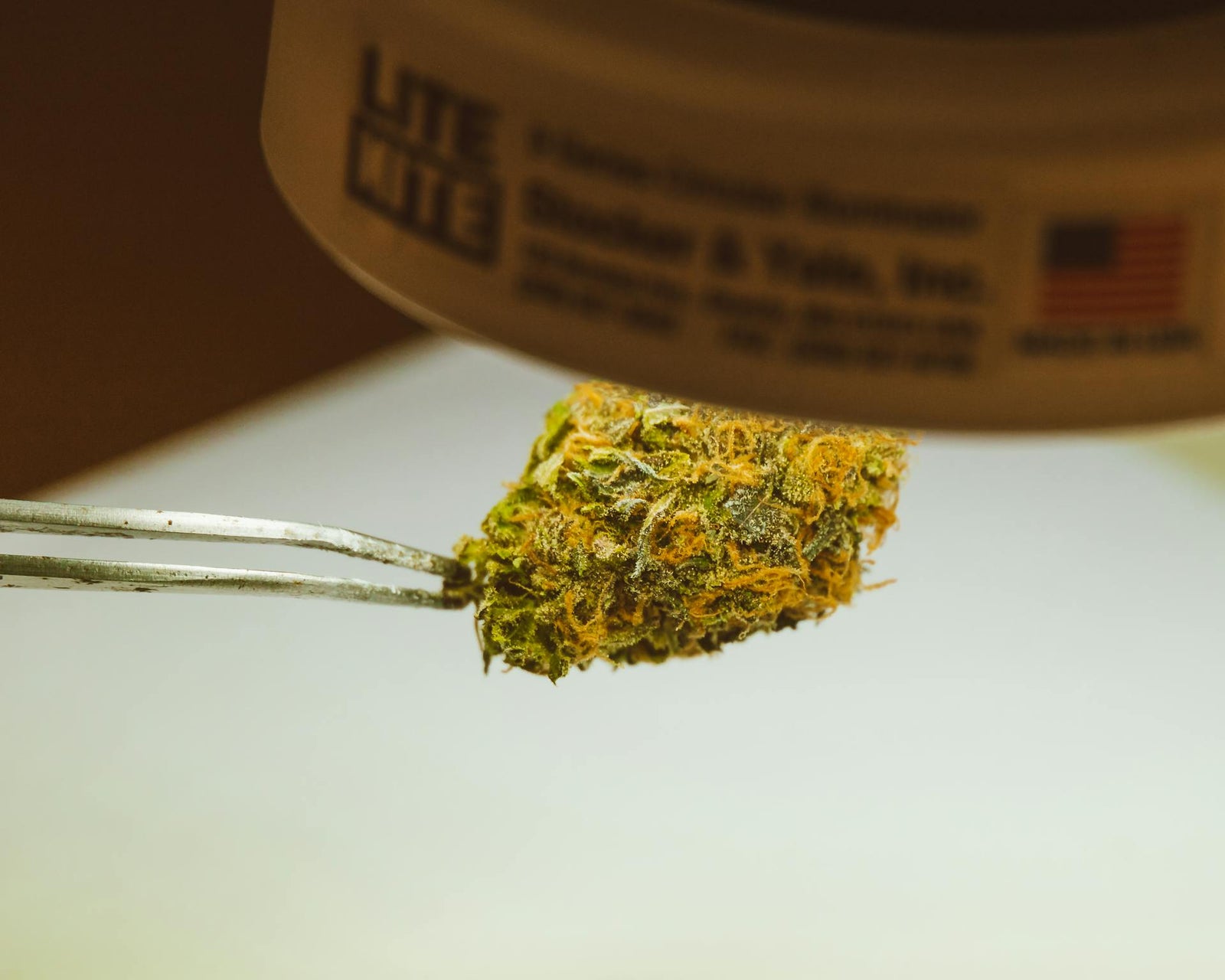
How is CBD resin made? Filtering, dry sift, ice-o-lator, rosin, 3x filtered: all techniques explained
Reading time: ~10 min, Cloud Store CBD technical guide.
"3x filtered, is it just a marketing name or does it really mean something?" This question often comes up in stores, and it's legitimate: between artisanal hash from the Maghreb, icy bubble hash from Amsterdam coffeeshops, and rosin pressed before our eyes, CBD resin manufacturing techniques have multiplied over a few decades. Not all are equal, and the price per gram rarely reflects the actual complexity of the process.
This article breaks down the main families of extraction and filtering used to transform a hemp flower into resin. We start with the raw material (trichomes), follow the six main methods (dry sift, pollinator, ice-o-lator, rosin, supercritical CO2, cold ethanol), and explain what "3x filtered" really means and why going down to 6x or 12x doesn't add much. Sources: Newsweed, classic hash-making technical protocols, Légifrance legal framework for France 2026.
The goal is simple: that on your next purchase, you can judge a resin by its manufacturing techniques, not its packaging.
Quick Answer
• CBD resin is made from trichomes, these small resin glands that contain cannabinoids (CBD, CBG) and terpenes — they measure between 25 and 200 microns according to Newsweed.
• Six main methods exist: dry sift, pollinator, ice-o-lator (bubble hash), rosin, supercritical CO2, cold ethanol. The first three are mechanical (solventless), the last three use heat, water or solvent.
• "3x filtered" refers to dry sieving in three successive passes, with removal of plant material between each pass. The smaller the micron size (190, 160, 120, 90, 70, 45, 25 µm), the finer the resin.
• 90 µm is generally considered the organoleptic "sweet spot". Beyond 3 passes, the purity gain becomes marginal for a production cost that explodes: this is why 3x remains the market's sweet spot.
• In France, all CBD resin must respect the 0.30% THC threshold (article R.5132-86 of the Public Health Code, decision of the Council of State on December 29, 2022). Synthetic derivatives (HHC, H4CBD, THCP) are not CBD and have been classified as narcotics since June 2024.
What exactly is CBD resin?
CBD resin is a concentration of trichomes separated from the rest of the plant. These trichomes are the tiny resinous glands that cover the flowers and some leaves of cannabis; they contain cannabinoids (CBD, CBG, sometimes CBN), the terpenes responsible for aromas, and some of the flavonoids. According to Newsweed, their size usually ranges "between 25 and 200 microns in diameter."
Raw CBD flower retains all the plant material around the trichomes: pistils, calyxes, small pieces of leaves. Resin, conversely, isolates these glands through a physical or chemical process and groups them into a compact or melting mass. To understand the difference in use, profile, and price between the two, see our CBD flower vs. CBD resin guide.
The extraction process dictates everything else: yield, purity, aromatic profile, final texture, and selling price. This is why two resins with 14% CBD can have radically different tastes — the method used preserves or destroys certain terpenes in the process.
The 6 main CBD resin extraction techniques
All CBD hash manufacturing techniques fall into three families depending on the method of trichome separation: mechanical dry (sieve), aqueous (ice + water), or thermal-chemical (heat, pressure, or solvent). The table below summarizes the six main methods used in 2026 on the French legal CBD market.
| Technique | Family | Principle | Advantage | Limitation |
|---|---|---|---|---|
| Dry sift | Mechanical dry | Micron sieve + cold agitation | Solventless, preserves terpenes | Requires dry and well-maintained raw material |
| Pollinator | Mechanical dry | Rotating drum (centrifugal force) + sieve | Faster than manual dry sift | More easily breaks plant material |
| Ice-o-lator (bubble hash) | Aqueous | Ice + water + stacked micron bags | Excellent yield, terpenes preserved | Drying essential, otherwise mold |
| Rosin | Thermal-pressure | Heating plates + pressure at 90-110 °C | No solvents, very pure | Low yield, requires high-end material |
| Supercritical CO2 | Solvent | CO2 under high pressure in supercritical state | No residue, customizable, clean | Industrial equipment, costly |
| Cold ethanol | Solvent | Ethanol bath at -20/-40 °C, then evaporation | Economical, eliminates waxes and lipids | Solvent must be fully evaporated, mandatory COA control |
On the French CBD resin market, the three mechanical techniques (dry sift, pollinator, ice-o-lator) cover the majority of premium references: these are the ones that allow the appellation filtered hash, 3x filtered, 6x filtered, bubble hash. Rosin is rarer in stores but is starting to gain popularity among enthusiasts. Solvent extractions are mainly used for CBD oils, not for resins to smoke.
Mechanical dry filtration: dry sift and sieves
Dry sift is the oldest hashish manufacturing technique. Historically practiced in North Africa, India, and Central Asia, it involves beating dried cannabis plants over a fine sieve to dislodge the trichomes, which are then collected as a fine powder — kief. This kief can be consumed as is or pressed to become hash.
Modern producers use a series of sieves with varying micron sizes, generally 190, 160, 90, 70, 45, and 25 µm according to Newsweed. The finer the mesh, the purer the trichomes isolated; the wider it is, the more volume is collected at the expense of some plant material.
Typical steps:
- Cooling of the raw material (24-48 h at -18 °C): trichomes become brittle, detaching more easily.
- Gentle agitation on the widest sieve (190 or 160 µm): large plant material does not pass, kief falls through.
- Successive sieving on finer meshes (90 → 70 → 45 µm): each pass removes more debris.
- Final pressing to create the resin texture, or storage as kief.
The process is mechanical in the strictest sense: no solvent, no water, no heat. It is this lack of aggression that preserves the most volatile terpenes and gives dry sift its vibrant aromatic profile. It also makes it demanding in terms of raw material: if the starting flower is mediocre, the result will be too.
Concrete demonstration of dry sift and hot pressing — Blato CBD channel.
The pollinator innovation (1980s)
According to Newsweed, the Pollinator appeared in the 1980s and revolutionized mechanical hash: it is a rotating drum (like a washing machine) equipped with an internal sieve. Centrifugal force automatically separates trichomes from plant material, which industrializes artisanal dry sift without changing its principle. All 3x filtered and 6x filtered hash on the market today goes through a pollinator or equivalent stage.
3x filtered: what it really means
"3x filtered" refers to a resin that has undergone three successive dry sieving passes, with plant material and overly coarse particles removed between each pass. As Aurélien Bernard on Newsweed summarizes: "3x filtered is therefore just the assembly of three different sieving qualities with filtrations between each to remove the maximum of plant material or debris."
Concretely, a typical 3x cycle might involve: pass 1 on 160 µm (removes large debris), pass 2 on 90 µm (concentrates mature trichomes), pass 3 on 70 µm (eliminates fine immature heads and dust). The result is a very clean resin, with a melting texture, which doesn't cause coughing when heated.
3x, 6x, 12x: where does the gain truly stop?
The marketing argument "the more you filter, the better it is" has its physical limits. Each successive pass removes less debris than the previous one (law of diminishing returns), while also eliminating intact trichomes trapped in the material. Beyond three passes, there is almost no noticeable purity gain, but 40 to 70% of the yield is lost. This is why 6x and 12x primarily exist as premium markers, not as perceptible organoleptic improvements.
Newsweed also specifies that "there is no defined rule for determining what is best": the final quality depends as much on the phenotype, the cultivation method (indoor or outdoor), and the care given to the raw material as it does on the number of passes.
The market's sweet spot has thus stabilized around 3x, considered the best quality-cost-yield compromise. To understand why the choice of raw material upstream matters as much as the filtering technique, see our guide to choosing your CBD flower.
Key points about microns
Serious producers often state the mesh size of the sieve used: 90u or 120u, with 'u' representing the µ (micron) symbol. 90 µm is generally considered the "top quality" threshold in the industry (Newsweed, Mila du Pollinator). Below that (45, 25 µm), you enter into very rare resins, almost blonde in color, reserved for uses where aromatic subtlety is paramount.
Ice-o-lator and bubble hash: ice water extraction
Ice-o-lator (or bubble hash) is based on a simple principle: trichomes become brittle on contact with ice water and detach through agitation. They are then collected by filtration through a series of stacked micron bags (bubble bags), often from 220 µm at the top to 25 µm at the bottom.
Typical steps:
- Mix flowers + ice cubes + very cold water in a bucket, then gently stir for 10 to 15 minutes.
- Filter the solution through stacked bags; trichomes settle on meshes corresponding to their size.
- Careful drying of the collected wet kief (on absorbent paper, 24-72 h, in a ventilated cell).
- Optional pressing to obtain compact resin.
The advantage of bubble hash is twofold: excellent yield (water helps release more trichomes than dry sifting) and enhanced preservation of terpenes, which are not oxidized by friction. The main drawback: if drying is botched, residual moisture promotes mold, making the product unfit for consumption. This process requires rigor in finishing.
Full demonstration of bubble hash, micron bags and drying — Blato CBD.
Rosin: heat and pressure, without solvents
Rosin is a physical extraction by heat and pressure, without any solvent or water. A specialized press applies between 1 and 5 tons of pressure to flower or kief placed between two heating plates (generally 90-110 °C), for 30 seconds to 2 minutes. The resin emerges as a golden oil that solidifies upon cooling.
This is probably the purest method technically: zero solvent residue, zero water, brief contact with heat. The aromatic profile is very true to the starting flower, sometimes even more expressive. On the other hand, the yield is low (15 to 25% of the initial weight) and the raw material must be almost perfect — rosin from mediocre flower will not salvage anything.
In the French CBD market, rosin is still a premium niche, sold mainly by the gram for informed connoisseurs. When well-made, it's a distinct experience: the resin bubbles slightly with heat, releases its aromas in a single puff, and cleans up without leaving any residue.
CO2 and ethanol: solvent extractions
Two solvents dominate industrial cannabinoid extraction in France: supercritical CO2 and cold ethanol. These techniques are mainly used to produce CBD oils, much less frequently for smokable resins; they deserve to be mentioned because they are part of the landscape and explain some of the price differences.
Supercritical CO2. CO2 placed under high pressure and controlled temperature enters a supercritical state (half-gas, half-liquid), which selectively dissolves cannabinoids and terpenes. Upon exiting, the CO2 returns to a gaseous state and evaporates completely — leaving no trace of solvent. This is the preferred method for serious manufacturers of full spectrum and broad spectrum oils, because it is customizable (specific cannabinoids or terpenes can be isolated) and clean. However, it requires expensive equipment.
Cold ethanol (winterization). Plant material is immersed in an ethanol bath at -20 or -40 °C: the cold prevents waxes, chlorophylls, and lipids from dissolving, while cannabinoids and terpenes pass into the solvent. After filtration and slow evaporation of the alcohol, a clean extract is obtained. This is more economical than CO2 but requires an additional step of solvent removal — hence the importance of a third-party certificate of analysis (COA) that measures residual solvents.
To understand the difference between full spectrum, broad spectrum, and isolate (the three possible results depending on how the solvent is used), see our CBD spectrum comparison.
How to recognize well-filtered CBD resin?
A well-made resin sends out some consistent signals, regardless of the technique used. Before buying or when taking the product out of the bag, here are the points to check:
| Criterion | Positive signal | Warning signal |
|---|---|---|
| Texture | Malleable, melts under the finger, soft wax | Brittle, dry, crumbly like wood |
| Color | From honey blonde to chocolate brown depending on the method | Green (chlorophyll, poor filtering), gray (oxidized), charcoal black (burnt) |
| Smell | Earthy, spicy, sometimes chocolatey or chypre depending on the profile | Pungent, chemical, plastic, or completely absent |
| Behavior on heating | Melts uniformly, bubbles slightly, releases aromas | Crackles, throws sparks, leaves a sticky black residue |
| Throat sensation | Smooth vapor, does not irritate, does not scratch the throat | Scratches, causes coughing, burnt plastic taste |
Serious resellers provide a consultable third-party Certificate of Analysis (COA): CBD content, THC compliance (< 0.3%), absence of pesticides, heavy metals, and residual solvents. This is the only true guarantee on the supply chain. For post-purchase storage, see our guide on storing CBD flowers and resins to preserve aromas.
Legal framework for CBD resins in France 2026
Any CBD resin legally sold in France must comply with the 0.30% THC threshold, in accordance with Article R.5132-86 of the Public Health Code and the decision n° 444887 of the Council of State of December 29, 2022, which confirmed the legality of marketing flowers, leaves, and resins with low THC. This threshold applies to both agricultural raw material and the finished product.
In practice, this means that a traceable French CBD resin cannot exceed 0.3% THC in batch analyses, regardless of the extraction method. This ensures that it remains under the industrial hemp regime and not as a narcotic.
⚠ Beware of synthetic derivatives
Several products advertised as "CBD+ hash", "HHC resin", "H4CBD hash" or "THCP" are not CBD: these are synthetic cannabinoids classified as narcotics since the ANSM order of June 2024. These molecules bypass the extraction techniques described here by starting from CBD isolates re-isomerized in the laboratory. For a complete understanding, see our guide on hemp derivatives and their risks.
For details on the overall legal framework (sale, transport, driving, travel), our complete guide to legal CBD in France 2026 covers all consumer questions.
In summary: what to remember
CBD resin is a concentration of trichomes — these resinous glands of 25 to 200 microns that contain cannabinoids and terpenes. Six main methods produce it: dry sift, pollinator, ice-o-lator, rosin, supercritical CO2, cold ethanol. The first three are mechanical and cover most of the smokable resins on the French market.
“3x filtered” refers to three successive passes of sieving with removal of plant material between each, using typical mesh sizes of 160 → 90 → 70 µm. Beyond 3 passes, the gain in purity becomes marginal for a significant drop in yield: 3x remains the market's sweet spot, 90 µm the threshold considered "top quality."
A well-filtered resin is recognized by its melting texture, its color from blonde to chocolate brown, its uniform behavior when heated, and the absence of throat irritation. The third-party COA remains the only objective guarantee of THC compliance and the absence of hidden synthetic cannabinoids.
Discover our 3x filtered resin (CBD 14% + CBG 45%), earthy-chocolate melting texture, traceable French selection.
See 3x filtered resinFAQ — Filtering and CBD resin extraction techniques
What exactly is 3x filtered?
3x filtered refers to a resin that has undergone three successive passes of dry sifting, with removal of plant material between each pass. The mesh sizes used typically decrease from 160 µm in the first pass to 70 or 45 µm in the third. The result is a very clean, melting resin that does not cause coughing when heated. The term applies to dry sift, sometimes assisted by a pollinator (rotating drum).
Difference between 3x filtered and bubble hash?
3x filtered is a three-pass dry sifting: dry material, micron sieve, mechanical agitation. Bubble hash (or ice-o-lator) uses ice and cold water to detach trichomes, which are then filtered through stacked micron bags. Both yield very good quality resin, but bubble hash preserves terpenes better (no dry friction) at the cost of essential drying to prevent mold.
Is 6x filtered really better than 3x?
Not significantly. Beyond three passes, the gain in purity becomes marginal for a significant drop in yield (40 to 70%). Newsweed even states that "there is no defined rule for determining what is best": the final quality depends on the phenotype, cultivation method, and care given to the raw material as much as the number of passes. 3x remains the sweet spot for quality-cost-yield in the market.
What is the best micron for filtering hash?
90 µm is generally considered "top quality" in the industry: it isolates mature trichomes without letting coarse plant matter pass through. Above that (160, 190 µm), more volume is collected but with more debris; below that (70, 45, 25 µm), rarer and more subtle resins are obtained, almost blonde in color, which only fully express their profile with impeccable raw material.
Why is CBD resin more expensive than flower?
Because it takes a lot of quality flower to get a little quality resin. Depending on the technique, the yield varies from 5 to 15% for dry sift, 15 to 25% for bubble hash, 15 to 25% for rosin. From 100g of premium flower, typically 10 to 25g of resin are obtained. Raw material costs, filtration time, and batch analysis are added. A serious 3x filtered resin generally costs between 3 and 5 €/g on the French market.
Is rosin purer than dry sift or bubble hash?
Technically yes, because it uses no solvents, no water, and brief contact with heat (90-110 °C, 30 s to 2 min). It is purely physical pressure. The trade-off is a lower yield (15-25%) and a strong requirement for the raw material: rosin from mediocre flower will not correct anything. It is a premium technique rather than a market standard.
How to check if a resin is well filtered?
Five signals: (1) malleable and melting texture under the finger, (2) color from honey blonde to chocolate brown without green or gray, (3) clear earthy-spicy smell without chemical notes, (4) uniform behavior when heated (melts, does not crackle), (5) non-irritating throat sensation. The only true objective proof remains the third-party Certificate of Analysis (COA), which measures CBD, THC, pesticides, heavy metals, and residual solvents.
Is 3x filtered legal in France?
Yes, provided the finished product respects the 0.30% THC threshold, in accordance with Article R.5132-86 of the Public Health Code and the decision of the Council of State of December 29, 2022. Any traceable French CBD resin must provide a batch analysis (COA) confirming this compliance. However, beware of products labeled "CBD+", "HHC", "H4CBD" or "THCP" which are synthetic cannabinoids classified as narcotics since June 2024.
Useful Sources
Newsweed — What is 3x filtered hash? (accessed May 7, 2026)
Newsweed — Cannabis Trichomes (accessed May 7, 2026)
Newsweed — Interview with Mila, inventor of the Pollinator (accessed May 7, 2026)
Newsweed — Bubble hash and bubble bags (accessed May 7, 2026)
Légifrance — Article R.5132-86 of the Public Health Code (accessed May 7, 2026)
Council of State — Decision n° 444887 of December 29, 2022 (accessed May 7, 2026)
ANSM — Synthetic cannabinoids classified as narcotics (2024) (accessed May 7, 2026)
⚠ Important note: this article is provided for informational and technical purposes only. It does not constitute an incitement to produce hash outside the legal framework, nor medical advice. Hemp cultivation in France is reserved for declared active farmers; any domestic production remains illegal. Consume in moderation, do not drive after use.