
BlogFleurs & résinesCBD flowers vs CBD resins: differences, choices...

CBD flowers vs CBD resins: differences, choices, and tips 2026

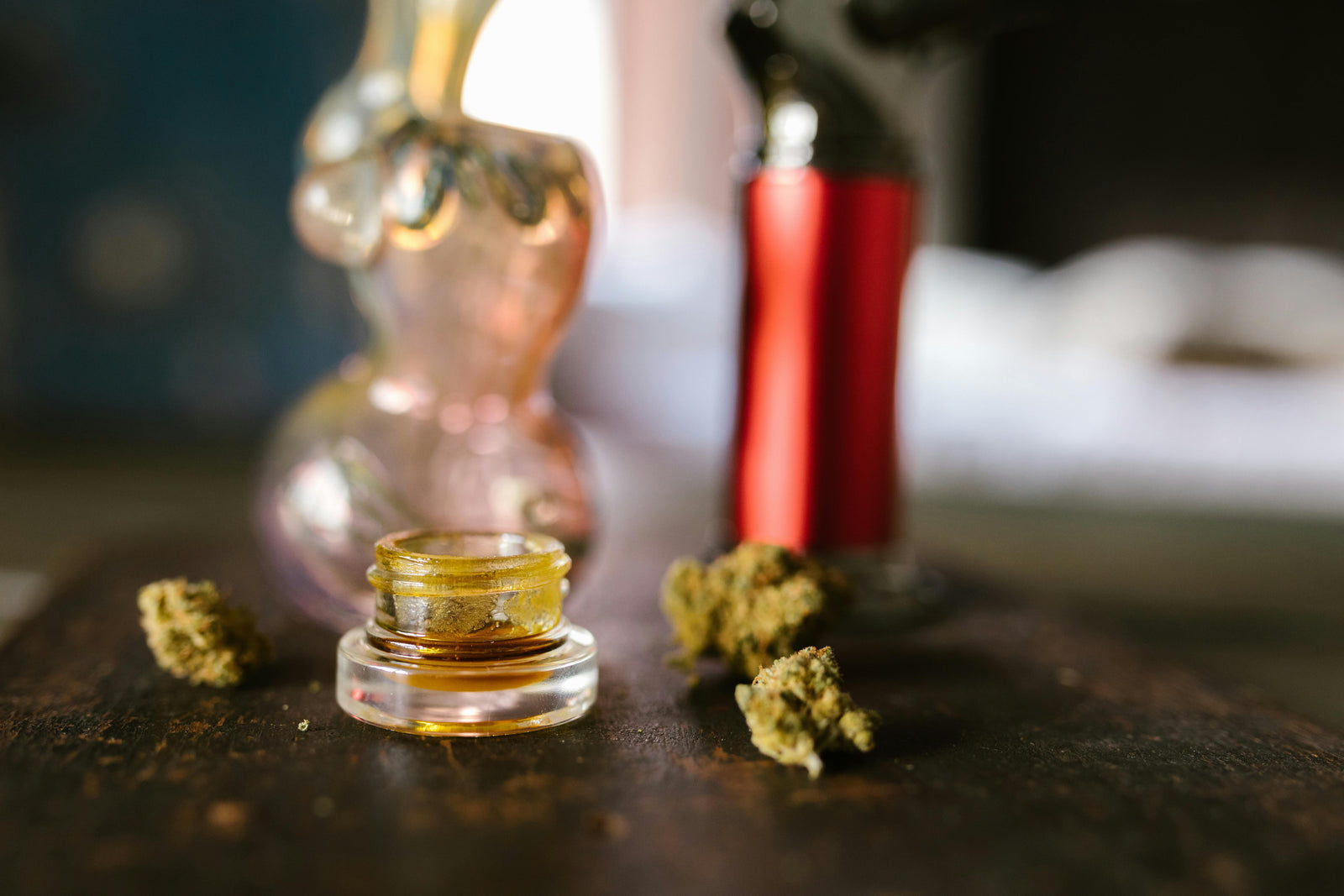
Bocal en verre contenant un concentré de cannabis (résine) entouré de bourgeons séchés sur une table — illustration du comparatif fleurs CBD vs résines CBD

Bocal en verre contenant un concentré de cannabis (résine) entouré de bourgeons séchés sur une table — illustration du comparatif fleurs CBD vs résines CBD

CBD Flowers vs CBD Resins: What are the differences in 2026?

Reading time: ~7 min, Cloud Store CBD comparison · updated on May 5, 2026.

You arrive at a CBD store and two universes coexist: flowers (dried "buds") and resins (hash, pollen, yellow). Same plant of origin, two radically different products in texture, use, and sensation. This guide lays out the real differences, without jargon, to help you decide which to start with or how to combine the two.

Both formats are legal in France under the same conditions, provided that the finished product contains less than 0.3% THC (decree of December 30, 2021, Légifrance, consulted on May 5, 2026) and that the sale of raw flowers and leaves has been authorized since the decision of the Council of State of December 29, 2022. The choice therefore depends solely on the feeling, taste, practicality, and budget.

Quick Answer

CBD Flowers: dried and trimmed bud, very clear aromatic profile (fruity, diesel, citrus…), typical 8-22% CBD, easy dosage by gram, shelf life 3 to 6 months.
CBD Resins: compressed extract of trichomes, foamy to oily texture, deeper and more resinous aromatic profile, often higher CBD levels (15-40%), shelf life 6 to 12 months.
Price per gram: similar order of magnitude (3 to 12 €/g for both), but since resin is more concentrated, the cost per use is often lower.
For beginners: flower is more intuitive (a pouch, a grinder, a familiar format). Resin requires a little more experience to work with it properly.

Texture and appearance: what you see first

CBD flower is the dried and trimmed "bud" of the female plant. You see the structure: orange pistils, green calyx, brilliant trichomes like crystals on the surface. It's a raw product, little processed after harvest. You buy it in a pouch, you grind it, you use it.

CBD resin is a compressed extract. Trichomes are mechanically separated from the plant (by dry sifting, cold sifting, or with water and ice), then pressed into slabs or blocks. The texture varies greatly depending on the method:

  • Foamy texture (e.g., Mousseux CBN, Jaune): airy, crumbly, easily breaks apart.
  • Oily/greasy texture (e.g., 3x Filtered, high-end hash): compact, slightly pliable, highly concentrated in resin.
  • Dry/crumbly texture (e.g., classic pressed pollen): can be cut with a knife, remains firm.

Visually, flower remains more telling for those who like to see what they are buying. Resin is more mysterious at first glance, but the sifting and pressing process also tells a story: uniform color, shine, absence of plant fragments are all quality signals.

See both universes in store:

CBD Flowers · CBD Resins

Aromatic profiles: clear for flower, deep for resin

Flowers deliver a very clear aromatic profile. Four families dominate: fruity/candy (Bubble Gum, Zkittlez), citrus (Lemon Zkittlez, Amnesia), creamy/dessert (Ice Cream, Sorbet, Gelato), and diesel/gassy (Sour Diesel, OG Kush, Strawberry Diesel). You recognize the dominant note when opening the bag, and the grinder releases even more of the aromatic signature. For those who like modern and precise aromas, flower is more expressive.

Resins work differently. Sifting concentrates the trichomes but also the most stable terpenes, those that resist pressure and the slight heating of extraction. The result is rounder, deeper, sometimes with woody or spicy notes not found in the original flower. Some examples:

  • 3x Filtered: high-end oily resin, very clean profile, woody and resinous notes, texture reminiscent of soft caramel.
  • Jaune (Yellow): medium sifting, citrus-floral notes, crumbly foamy texture, quite floral fragrance.
  • Mousseux CBN: specific extract with CBN presence, white flower and citrus profile, airy texture.

According to the Russo review (2011) on terpenes (PubMed), the entourage effect between cannabinoids and terpenes modulates the perception of the product. This explains why, at equivalent CBD levels, two products can give different sensations: what is sometimes called the "character" of hash.

Cannabinoid levels: what the product sheets say

CBD concentration is typically higher in resins, because extraction concentrates the trichomes (which are the richest cannabinoid fraction of the plant). Orders of magnitude on the French market in 2026:

Format Typical CBD THC (legal) Other cannabinoids
Greenhouse flower 10-16 % < 0,3 % Traces of CBG, sometimes CBN
Indoor flower 14-22 % < 0,3 % Traces of CBG, sometimes CBN
Pollen / standard hash 15-25 % < 0,3 % Measurable CBG
Premium resin (3x, yellow) 22-35 % < 0,3 % CBG, sometimes CBN, intact terpenes
Specific resin (Mousseux CBN) 15-25 % CBD < 0,3 % CBN 3-8 % (sleep profile)

The higher CBD level of a resin does not automatically mean a stronger effect. The sensation depends on the terpene profile, the quality of the extraction, and especially the dose consumed. A 30% CBD resin taken at 0.1 g delivers the same amount of CBD as a 15% flower taken at 0.2 g.

Mandatory legal compliance

Any legal product in France contains less than 0.3% THC in the finished product. The ANSM fact sheet (consulted on May 5, 2026) reminds that CBD is not a medicine and that no therapeutic claims can be made. Always check the laboratory analysis certificate (COA) before purchase, especially for resins where the potential THC concentration is more sensitive.

Daily use: practicality and dosage

With a flower

You open the bag, take the desired amount, grind it, weigh it if necessary. Precision to the nearest gram, familiar format, little equipment. Ideal for infusion (gently heat with a fatty substance to activate cannabinoids), cooking, or low-temperature vaporization (180-200 °C depending on the aromatic profile).

With a resin

You cut a small portion (sometimes half a gram is enough for several uses), crumble it or gently heat it to soften an oily resin, and dose it by eye. It's less immediate than flower but becomes quick once you get the hang of it. Resin is well suited for vaporization (with a concentrate-compatible accessory) and infusion.

For beginners, flower remains the most intuitive format. Resin requires a little learning curve, but in return offers a concentration and longevity of aromas that flower cannot maintain.

Storage: durations and precautions

Both formats fear the same enemies: light, oxygen, heat, excessive or insufficient humidity. Resin, being more compact, is however less exposed than flower (less surface area in contact with air, more stable terpenes after pressing).

Criterion CBD Flowers CBD Resins
Optimal duration 3 to 6 months 6 to 12 months
Main risk Drying out, loss of terpenes Hardening (or softening if hot)
Ideal storage Glass jar + Boveda 62 % Glass jar + parchment paper for oily ones
Overall sensitivity High Medium

Details on storage, methods, and pitfalls to avoid are in the specialized guide: how to store your CBD flowers and resins.

Price per gram and cost per use

According to the OFDT 2025 summary (consulted on May 5, 2026) and prices observed in major French stores, the 2026 ranges are quite similar between the two formats, but the cost per use differs because resin is more concentrated:

  • Greenhouse flower: 3-7 €/g, typical dose 0.15-0.3 g, cost per use ≈ 0.7-2.1 €.
  • Indoor flower: 5-12 €/g, typical dose 0.15-0.3 g, cost per use ≈ 1-3.6 €.
  • Standard resin: 4-10 €/g, typical dose 0.1-0.15 g, cost per use ≈ 0.5-1.5 €.
  • Premium resin: 7-15 €/g, typical dose 0.08-0.12 g, cost per use ≈ 0.7-1.8 €.

In the long run, resin often offers a better cost/use ratio, especially premium versions which are consumed in very small quantities. Flower remains simpler to dose for those who don't want to calculate.

For detailed prices and European comparison:

Read: CBD prices France vs Europe in 2026

Which to choose based on your profile?

You're new to CBD

Start with flower. Intuitive format, easy dosage, direct aromatic profile. A fruity or creamy greenhouse at 12-14% CBD allows you to understand what you like without investing too much. For details on choosing a strain, see how to choose your CBD flower.

You already know flowers and want to explore

A standard resin (classic pressed pollen) is a good first step. New texture, deeper profile, different sensation. Avoid going straight for 3x Filtered or high-end hash: the jump might be a bit much if you don't yet have a reference point.

You are looking for specific sleep use

Mousseux CBN or CBN-rich varieties are designed for an evening ritual. The presence of CBN, a cannabinoid with a more sedative profile than pure CBD, is an asset for those looking to wind down before bed.

You are a regular consumer

Mixing is often the best approach: two or three flowers with varied profiles for aromatic diversity, plus a quality resin as added value. The cost per use remains controlled, and you don't get tired of a single product.

Summary table: CBD flowers vs CBD resins

Criterion CBD Flowers CBD Resins
Texture Dried, trimmed bud Compressed, foamy to oily
Aromatic profile Clear, readable (fruity/diesel/citrus) Deep, resinous, sometimes woody
Typical CBD level 8-22 % 15-35 %
Beginner friendliness Very easy Medium (slight learning curve)
Dosing precision Very precise Good (by eye)
Storage 3-6 months 6-12 months
Price per gram 3-12 € 4-15 €
Cost per use 0.7-3.6 € 0.5-1.8 €
Ideal for Beginners, varied aromas, daily ritual Concentration, deep profile, regular consumer

FAQ: CBD flowers vs resins

What is the main difference between CBD flower and resin?
Flower is the dried and trimmed "bud" of the plant, raw. Resin is a compressed extract of trichomes (the most concentrated cannabinoid fraction), sifted and then pressed. Flower retains the visible plant structure, resin is a concentrated material.
Are resins stronger than flowers?
Theoretically, yes, because the CBD concentration is higher (often 20-35% compared to 8-22% in flower). But the actual experience depends on the dose consumed and the terpene profile. A well-produced 14% flower, at an equivalent dose, can provide a comparable experience to a 25% resin with fewer intact terpenes.
What should I choose to start with CBD?
Flower. It's an intuitive format, easy to dose, and requires little equipment to understand. A fruity or creamy greenhouse flower at 12-14% CBD covers 80% of a beginner's needs. Resin can be explored later, once the ritual is established.
Can I mix flower and resin?
Yes, it's even a common practice among regular users. Sprinkling a little resin on a flower allows you to combine the aromatic clarity of the flower with the depth of the resin. For precise dosing, it's best to test them separately before combining.
Which resin is best for sleep?
Resins with CBN (e.g., Mousseux CBN) are designed for this purpose. CBN, a minor cannabinoid derived from oxidized THC, has a more sedating profile than CBD alone. A moderate dose in the evening, as an infusion or vaporization, integrates well into a bedtime routine.
How can I tell if a resin is of good quality?
Four signs: uniform color (no visible plant fragments), strong and characteristic smell when cut, texture consistent with its type (foamy, greasy, crumbly), and a provided certificate of analysis. A very dark and odorless resin is rarely a good sign.
Does resin really last longer than flower?
Yes, under identical storage conditions. Compression reduces the surface area in contact with air, which slows down terpene evaporation and oxidation. Expect 6 to 12 months for well-stored resin, compared to 3 to 6 months for flower. Details on storage methods can be found in the conservation guide.
Are hash and pollen the same thing?
Not quite. "Pollen" often refers to a simple sift, pressed into thin slabs. "Hash" is a generic term that covers all artisanal resins, from basic pollen to premium extractions (3x Filtered, ice-water, high-grade dry-sift). All pollens are hashes, but not all hashes are pollens.

To go further

Main sources (consulted on May 5, 2026)

Disclaimer: This guide is for informational purposes only and does not constitute medical advice. CBD flowers and resins are not medications. If you have any doubts about your personal situation, consult a healthcare professional. Last updated: May 5, 2026.

Cet article t'a plu ? Un coeur, ça nous aide à savoir quoi écrire ensuite.