
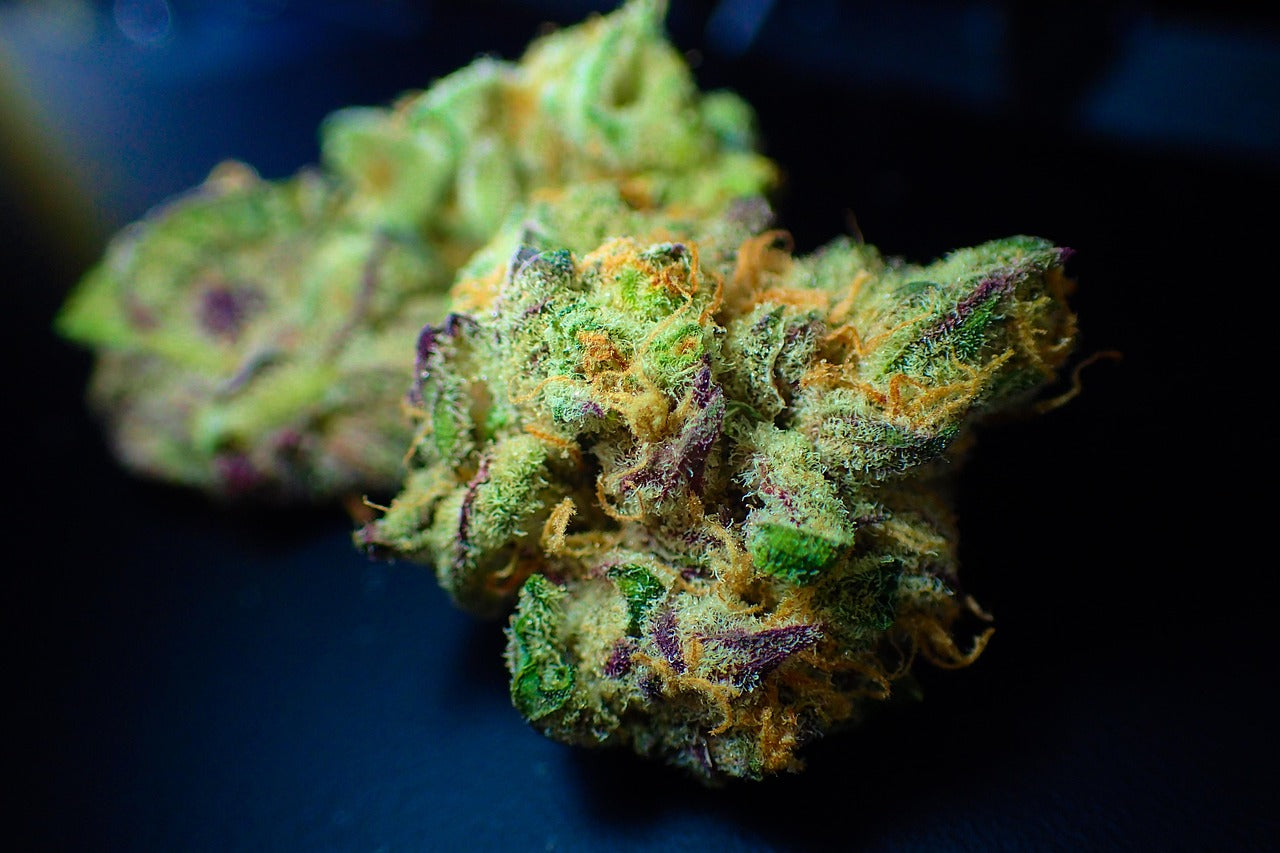
Two CBD flower strains both display 16% cannabidiol. You take one in the evening, and you melt into the couch. You take the other in the morning, and you feel light and clear-headed. Same molecule, same dosage, radically different experience. The reason isn't in the big percentage proudly displayed on the label: it's hidden in the flower's terpene profile, those aromatic molecules we often overlook, yet which dictate almost everything about the experience.

What exactly is a terpene?
Terpenes are volatile aromatic compounds produced by the hemp plant in its trichomes, those small resinous hairs that shimmer on the surface of the buds. They are responsible for a flower's scent — the lemon that stings your nose when you open a bag of Amnesia, the woody note that permeates a Kosher Kush, the pine freshness of a Critical 2.0.
More than 150 terpenes have been identified in cannabis to date, according to available scientific reviews. In practice, six of them alone account for most of what you experience olfactorily and upon consumption: myrcene, limonene, α-pinene, linalool, β-caryophyllene, humulene. The others are present, but often in proportions less than 1% of the profile.
The plant produces them for three biological reasons: to defend against insects and fungi, to attract pollinators, and for thermoregulation. This is also why indoor cultivated flowers under intense hydroponic lights often exhibit more pronounced terpene profiles than outdoor flowers stressed by the climate: the plant can concentrate its energy on resin production rather than survival.
Three things a terpene is not
A terpene is not a cannabinoid: it does not act directly on the CB1/CB2 receptors of the endocannabinoid system (with one exception, see β-caryophyllene below). It is not psychoactive in the sense of THC: you don't get high from limonene. And it is not exclusive to hemp: you breathe it every day in a squeezed lemon, a walk in a pine forest, or a bouquet of lavender.
The entourage effect: what Russo showed in 2011
In 2011, American researcher Ethan B. Russo published an article in the British Journal of Pharmacology that changed the perception of cannabis: "Taming THC: potential cannabis synergy and phytocannabinoid-terpenoid entourage effects" (Russo, Br J Pharmacol 2011;163(7):1344-64). The idea: cannabinoids (CBD, THC, CBG, CBN...) and terpenoids act synergistically, and the effect of a flower cannot be reduced to the sum of its isolated components. To understand each of these cannabinoids, see our guide CBD, CBG, CBN: differences and how to choose.
Specifically: a single terpene, at a modest dose, has a weak effect. CBD alone has a well-documented profile. But when you take the two together — as in a full-spectrum flower or oil — the sensation becomes different, sometimes amplified, sometimes mellowed, depending on the exact composition of the terpene profile. Myrcene enhances sedation, limonene lightens the mood, pinene keeps the mind clearer.
To explore the difference between oils that capture this terpene profile and those that discard it, see our comparison full spectrum, broad spectrum or isolate.
Practical implication
Choosing a flower based solely on its CBD content is like choosing a wine based on its alcohol percentage. You miss 80% of the useful information. The terpene profile, however, tells you what the flower will make you feel in practice. That said, if you start with the raw percentage, we have classified the most potent CBD flowers — to be cross-referenced with their terpene profile.
The 6 dominant hemp terpenes, one by one
Myrcene — the "couch-lock" marker
Signature aromas: earthy, fruity (mango, grape), notes of clove. Myrcene is often the most abundant terpene in indica-dominant strains, and in a good portion of modern hybrid strains.
Described effects in preclinical research: sedative, muscle relaxant. It is associated with the famous couch-lock in classic cannabis consumption. In a legal CBD product (THC < 0.3%), you find the relaxing dimension without psychoactivity.
Cloud Store side: it is naturally dominant in strains like Snow OG (earthy, woody), Kosher Kush (earthy, spicy), and Strawberry Diesel with its fruity note.
Limonene — the mood elevator
Signature aromas: citrus, lemon, grapefruit. It's the second most common terpene in cannabis, and the easiest to recognize by smell: if you open a bag and it smells distinctly like lemon, you have a good chance of having limonene in front of you.
Described effects: mild anxiolytic, mood elevator, antibacterial and antifungal properties studied in cosmetology. Also present in essential oils of lemon, orange, and bergamot.
Cloud Store side: the "citrus" family is rich with us — Amnesia US, Citrus Kush, Blue Gelato (citrus/blueberry), Bubble Gum (sweet citrus), and even Moonrock 57% with its lemony note.
α-Pinene — the clear and alert note
Signature aromas: pine, fir, rosemary, fresh forest undergrowth. It is the most widespread terpene in the plant kingdom in general — it gives its scent to coniferous forests.
Described effects: promotes alertness and short-term memory in several preclinical studies, mild bronchodilator. It also plays a counterbalancing role against certain cognitive effects of THC in non-CBD varieties.
Cloud Store side: Rainbow x GP3 (tropical pine) and Small Bud Critical 2.0 carry a marked pine note in their aromatic profile.
Linalool — the floral relaxant
Signature aromas: floral, lavender, sweet, sometimes spicy on the aftertaste. It is the star terpene of lavender essential oil, long studied for its calming properties.
Described effects: anxiolytic, mild sedative, mild analgesic. Several aromatherapy studies support its role in acute stress management.
Cloud Store side: we find it in the floral profiles of Strawberry Diesel, M.A.C (Miracle Alien Cookies), Small Bud Gelato, as well as in resins like Jaune and Mousseux CBN.
β-Caryophyllene — the exception that interacts with CB2 receptors
Signature aromas: peppery, spicy, woody, clove. You recognize it by its slightly biting sensation on the nose, like freshly ground black pepper.
Described effects: it is the only terpene known to date to directly activate the CB2 receptor of the endocannabinoid system (a receptor linked to inflammation and immunity, especially in peripheral tissues). It is studied for its anti-inflammatory and analgesic effects.
Cloud Store side: Sour Diesel (GP3) (spicy/diesel), Snow OG and Kosher Kush with their spicy note, and our 3× Filtré with its woody profile.
Humulene — the silent accomplice
Signature aromas: woody, earthy, hops (it is also a major terpene in beer). Often in the background, it accompanies myrcene and β-caryophyllene in complex profiles.
Described effects: anti-inflammatory, possible appetite suppressant effect (studied preclinically in animal models). Less documented than the other five, but recurrent in earthy-dominant strains.
Cloud Store side: we find it in the complete profiles of Snow OG and Kosher Kush, complementing myrcene and caryophyllene.
Summary table: terpene × effect × Cloud Store strains
This table cross-references the six dominant terpenes with their aromatic signature, the effects described by research, and the strains in our catalog where this terpene is likely dominant or co-dominant — based on the aromatic notes observed in each batch.
| Terpene | Aromas | Described Effects | Probable Cloud Store Strains |
|---|---|---|---|
| Myrcene | Earthy, fruity, clove | Sedative, muscle relaxation | Snow OG, Kosher Kush, Strawberry Diesel |
| Limonene | Citrus, lemon | Anxiolytic, mood elevator | Amnesia US, Citrus Kush, Blue Gelato, Bubble Gum, Moonrock 57%, Mousseux CBN |
| α-Pinene | Pine, fir, fresh | Alertness, memory, bronchodilator | Rainbow x GP3, Small Bud Critical 2.0 |
| Linalool | Floral, lavender | Anxiolytic, mild sedative | Strawberry Diesel, M.A.C, Small Bud Gelato, Jaune, Mousseux CBN |
| β-Caryophyllene | Peppery, spicy, woody | Anti-inflammatory (CB2), analgesic | Sour Diesel, Snow OG, Kosher Kush, 3× Filtré, Mousseux CBN |
| Humulene | Woody, earthy, hops | Anti-inflammatory, appetite suppressant | Snow OG, Kosher Kush (in the background) |
The strain ↔ terpene mapping is based on the aromatic profiles observed in each batch. No dedicated quantitative HPLC terpene analysis is required by French CBD regulations to date. Cloud Store product pages display the dominant aromatic notes, which allows for an indirect but reliable reading of the terpene profile.
Practical interpretation
What this table allows you to do: if you're looking for an evening flower, look towards myrcene and linalool. If you're looking for a daytime strain that won't disrupt your focus, opt for limonene or α-pinene profiles. And if you visit a Cloud Store product page, the Aroma: ... tags you see actually provide a direct indication of the dominant terpene — much more useful than just the CBD percentage.
How to read a terpene profile on a flower's product page
Not all CBD stores display information in the same way, and this is the main obstacle to informed purchasing. Here are the three levels of information you might encounter.
Level 1 — aroma tags (our approach)
On each Cloud Store product page, you'll see tags like Aroma: Citrus, Aroma: Woody, Aroma: Floral. This is a qualitative reading: we don't write "0.8% limonene," we write "this flower gives off lemon." The advantage: it's immediately understandable and reflects the actual consumption experience. The drawback: it's less precise than a quantitative analysis.
Level 2 — certificate of analysis (COA) with quantification
Some laboratories display a quantitative breakdown of the terpene profile (e.g., myrcene 0.5%, limonene 0.2%, β-caryophyllene 0.15%). This is rare in legal French CBD because the analysis is not mandatory — only THC levels and main cannabinoids are systematically measured. When a website displays this information, it's a serious indicator.
Level 3 — commercial promises without proof
Beware of "rich in limonene for focus," without any source or quantification, especially if the advertised aromatic profile on the page doesn't match the Aroma tag at all. Terpenes aren't everything, and an argument that oversells a single molecule as a medicine is almost always questionable. To learn more about reading labels for oils, see our guide how to read a CBD oil label.
3 mistakes to avoid to preserve terpenes
Terpenes are volatile molecules, meaning they evaporate easily. A poorly stored flower loses most of its aromatic profile in a few weeks, and with it, a large part of the felt effect.
1) Excessive heat
Above 175 °C, most terpenes begin to degrade or transform. The harsh combustion of a joint (punctual >800 °C) destroys a large majority of them. Controlled vaporization between 160 and 190 °C preserves a significantly higher proportion of the original aromatic profile, which is a key argument for vape enthusiasts.
2) Oxidation and light
Prolonged contact with air, especially in the presence of direct light, oxidizes terpenes and transforms them into odorless or unpleasant compounds. Ideal storage: airtight amber (or opaque) jar, cool and dry place, away from sunlight. We discuss this in detail in the guide how to store CBD flowers and resins to preserve their aromas.
3) Grinding too early
Grinding a flower in a grinder releases terpenes into the open air. If you grind your entire bag on Monday to consume throughout the week, you'll end up on Friday with a flower that has lost a significant portion of its aromas. Simple reflex: grind just before consumption, not in advance.
What science really says (and doesn't say yet)
The enthusiasm around terpenes deserves honest nuance. Russo's review (2011) remains THE reference for the entourage effect, and its hypotheses have since been corroborated by other works. But the majority of available data still comes from preclinical studies (in vitro, animal models) rather than large-scale controlled human clinical trials.
Specifically, this means that:
- The described effects (sedation from myrcene, anxiolysis from linalool, anti-inflammatory from caryophyllene) are well-documented mechanistically, meaning we understand the biological pathways through which they would act.
- The dosages at which these effects manifest in humans and their actual intensity under common usage conditions still need to be specified.
- Therefore, terpene profiles should be read as an experiential orientation, not as a prescription. You don't "take" linalool to treat your anxiety: you choose a flower whose aromatic profile corresponds to the experience you are looking for.
For the regulatory dimension of all this, see our guide to legal CBD in France in 2026. Terpenes naturally present in a compliant flower (THC < 0.3%) are authorized. Conversely, semi-synthetic derivatives like HHC or H4CBD do not reproduce this natural profile — this is also one of the reasons why we do not list them.
All our CBD flowers and resins are tagged by aromatic profile, to help you choose according to what you want to feel and not just according to the displayed percentage.
View our CBD flowers by profileFAQ — Terpenes and CBD
Do CBD terpenes have psychoactive effects?
No, not in the sense of THC. Terpenes do not bind directly to CB1 receptors (the receptor responsible for the "high" effect). They modulate the perceived effect of a CBD flower or full spectrum oil, but no single terpene causes an alteration of perception comparable to THC-rich cannabis.
Can pure terpenes, like essential oils, be consumed?
Pure terpenes exist in aromatherapy (lavender essential oil for linalool, lemon for limonene). But their isolated use falls outside the scope of CBD: it's a different sector, with its own precautions (mandatory dilution, possible allergies, contraindications during pregnancy). Cloud Store does not market isolated pure terpenes.
Are hemp terpenes legal in France?
Yes. Terpenes naturally present in a hemp flower compliant with the French threshold of 0.3% delta-9 THC are authorized, as are all natural cannabinoids (CBD, CBG, CBN). Their extraction and isolation for specific commercial purposes may eventually be regulated by sectoral regulations (food flavoring, cosmetics).
Why don't two Amnesia flowers taste exactly the same?
The terpene profile varies from batch to batch, even for an identical variety on paper. Growing conditions (light, humidity, nutrients), harvest period, drying, and storage all influence the final terpene ratio. That's why an Amnesia harvested in spring won't have the same citric intensity as an Amnesia harvested in autumn, even from the same genetics.
Do CBD oils contain terpenes?
It depends on the spectrum. A full spectrum oil retains the natural terpenes present in the initial extract. A broad spectrum oil keeps some of them depending on the purification method. A CBD isolate, by definition, contains no terpenes (just pure CBD). To understand the difference, see our guide full vs broad vs isolate.
Which terpene to choose for sleep?
In terms of scientific literature, myrcene and linalool are most often associated with sedative or relaxing effects. In practice, look for varieties tagged Aroma: Earthy, Aroma: Floral, Aroma: Woody. For a night-oriented profile, we have a dedicated article: CBD for sleeping in 2026.
Do HHC or H4CBD reproduce the same terpene profile as natural CBD?
No. HHC and H4CBD are semi-synthetic derivatives obtained by chemical conversion of CBD, not natural extracts from a flower. The manufacturing process does not preserve the original terpenes, which may need to be artificially reintroduced. This is one of the reasons why Cloud Store does not list them, in addition to their fragile or prohibited legal status in France.
Information for educational purposes, updated May 20, 2026. The effects described in this article are derived from available preclinical and clinical research, and do not constitute medical advice. For any health questions, consult a healthcare professional.