“Is CBD a drug?” This is undoubtedly the question we are asked most often, right after “does it get you high?”. Behind it lies a genuine concern: fear of breaking the law, becoming dependent, or taking a risk with one's health. The short answer: no, CBD is neither a drug in the common sense nor a narcotic under the law. Here is why, point by point—and, more importantly, where the real trap lies.
Updated September 23, 2026: field tests, RIPOST law, anti-doping status.
The Essentials
- CBD is non-psychotropic: it does not get you high and does not alter consciousness, unlike THC.
- As early as 2017, the WHO concluded that pure CBD presents no potential for dependence or risk to public health.
- In France, CBD is legal under 0.3% THC and is not a narcotic—unlike synthetic cannabinoids (HHC, H4CBD), which have been classified as narcotics since 2023 and 2024.
- A CBD flower looks and smells like cannabis, and a rapid test cannot distinguish between them: only a laboratory analysis can settle the matter. It is best to keep your products in their packaging, with the invoice.
Is CBD a drug?
No. CBD (cannabidiol) is a non-psychotropic molecule: it causes neither euphoria, nor a “high,” nor an alteration of perception. In 2017, the World Health Organization established in its pre-review report that cannabidiol does not produce a euphoric effect and does not present a potential for abuse. Where the word “drug” evokes a product that alters the state of consciousness and creates dependence, CBD checks neither of those boxes.
This is where the misunderstanding lies: CBD comes from the same plant as recreational cannabis, but it is not the same molecule. The component that gets you high is THC—not CBD. People consume CBD for a relaxing effect, not a narcotic effect. The nuance changes everything, both legally and physiologically.
Is CBD a narcotic under the law?
No, not in France in 2026. Cannabidiol is not listed as a narcotic. The framework is clear: the decree of December 30, 2021, authorizes hemp and its products provided that the finished product contains less than 0.3% THC. The Council of State’s decision on December 29, 2022, confirmed the legality of selling CBD flowers and leaves.
In other words, what is regulated is THC, not CBD. A flower or oil that is compliant remains below the legal threshold and does not fall under the narcotics law. For the full details of the French legal framework, we have written a dedicated guide: the CBD law in France in 2026.
CBD, THC, and “soft drugs”: what are the differences?
The difference comes down to one word: psychoactivity. THC is psychoactive and classified as a narcotic; CBD is not. The expression “soft drug” generally refers to cannabis rich in THC with a moderate effect—a category that CBD does not fall into, precisely because it does not get you high.
Concretely, the two molecules act differently on the body:
- THC binds strongly to the brain's CB1 receptors: this is what causes the high and leads to its classification as a narcotic.
- CBD interacts with the endocannabinoid system indirectly, without a euphoric effect. We are talking about relaxation, not intoxication.
Calling CBD a “soft drug” is therefore inaccurate. It is not an attenuated version of recreational cannabis: it is a different molecule, without the component that causes problems.
Does CBD have psychoactive effects?
Not in the way that is usually understood. CBD does not get you high, does not alter perception or consciousness, and does not provide the “stoned” feeling of THC. It is not inert, however: it interacts with the endocannabinoid system, and many consumers describe a relaxing effect. The 2018 WHO report summarizes it as follows: in humans, CBD shows “no effect indicative of any abuse or dependence potential” (WHO, Critical Review Report, 2018). The nuance to remember: it acts, but it does not intoxicate.
Does CBD cause dependence?
No, according to available data. In its 2017 report, followed by its 2018 critical review, the WHO concluded that CBD presents no potential for abuse or dependence in humans. No withdrawal syndrome comparable to that of tobacco or THC has been described for cannabidiol alone.
This is actually one of the reasons why some former users use it as a tool to reduce THC or tobacco: you keep the ritual without the addictive molecule. CBD does not create the downward spiral of addiction—which does not mean it should be consumed without reflection, just like any other product.
Is CBD dangerous to health?
CBD is generally well-tolerated: the WHO described a “good safety profile” in 2018. The reported side effects remain mild and infrequent—fatigue, dry mouth, and sometimes digestive issues or a drop in blood pressure. An important clarification: CBD is not a medication and does not cure any disease. We are talking here about a wellness product, not a treatment.
Some points of caution, to be acknowledged honestly:
- High doses: studies on pharmaceutical CBD (at very high doses, unrelated to wellness use) have observed elevations in liver enzymes. At common doses, the context is not the same, but it is an invitation not to overconsume.
- Drug interactions: CBD can interfere with the way the liver metabolizes certain medications. If you are undergoing treatment, ask your doctor or pharmacist for advice before taking it.
- Pregnancy and breastfeeding: as a precaution, CBD is not recommended. When in doubt, abstain.
- Method of consumption: combustion (smoking) produces irritating compounds regardless of the material being burned. Vaporization or infusion preserve the flower better.
In short: no established danger for a healthy adult at reasonable doses, but use common sense and seek medical advice if you are on medication.
The fake “drugs” sold as CBD
This is the real trap, and our red line. The danger does not come from CBD, but from synthetic molecules sold under misleading names: HHC, H4CBD, HHCPO, THCP, “CBD+”. These are semi-synthetic cannabinoids, classified as narcotics in France: HHC as of June 13, 2023, followed by H4CBD, HHCPO, and THCP on June 3, 2024 (ANSM, 2023; ANSM, 2024). Unlike CBD, these are psychoactive, and their safety profile remains poorly understood.
In June 2025, the ANSM warned of “several hundred poisonings” recorded since the beginning of 2024 among consumers of products sold as CBD, which in reality contained synthetic cannabinoids (HHC, H4-CBD, MDMB-PINACA) or a THC level higher than 0.3% (ANSM, June 19, 2025). The rule is simple: a true CBD seller does not market any of these derivatives. We do not sell them, by sanitary choice. To understand each molecule and its risks, read our guide on hemp derivatives (HHC, H4CBD, HHCPO). When searching for “CBD synthetic drug,” this is precisely what you need to be wary of.
Why is CBD sometimes mistaken for a drug?
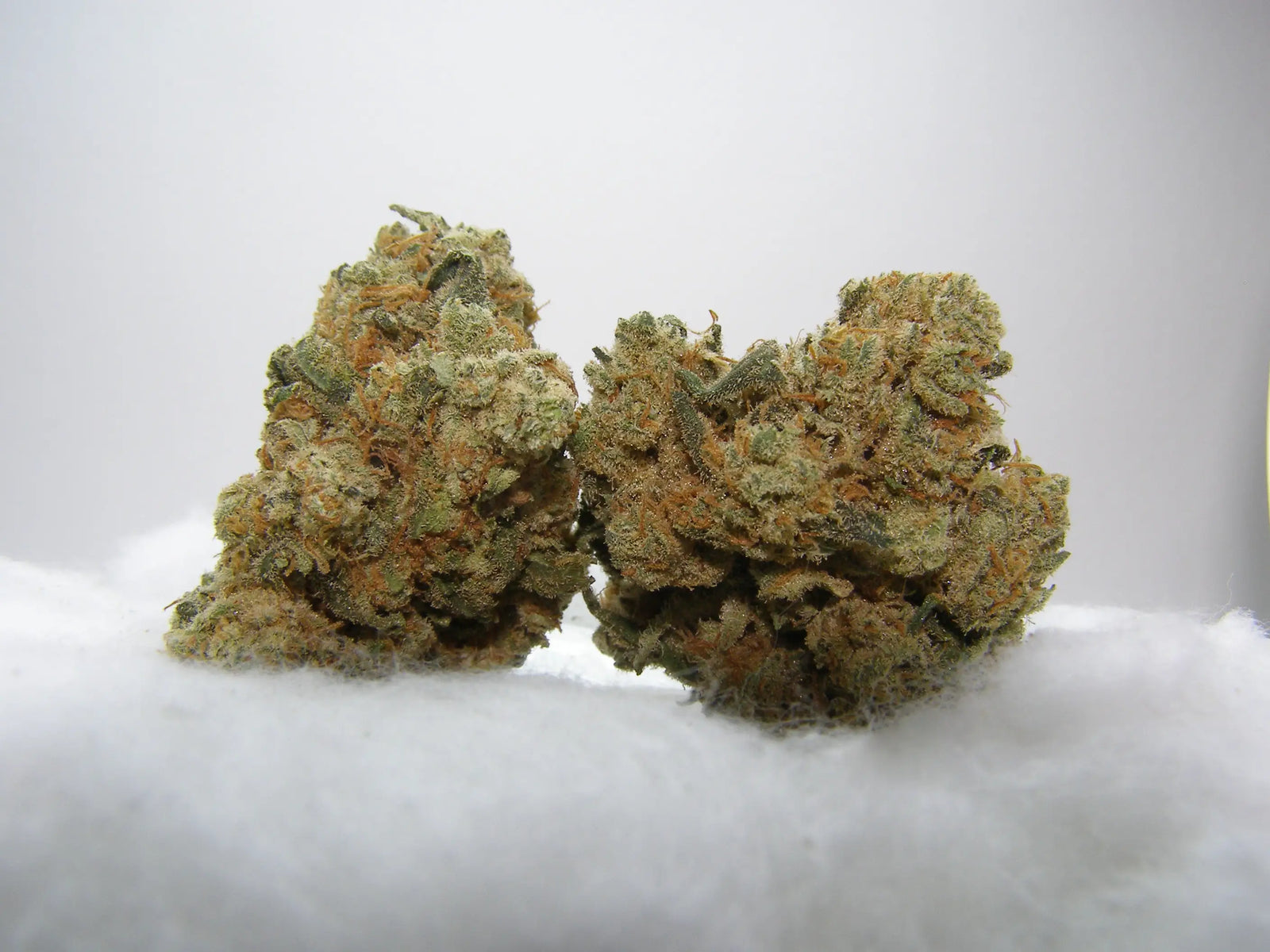
Because to the eye and the nose, nothing distinguishes it from cannabis. A CBD flower comes from the same plant, Cannabis sativa, and has its appearance and smell. Only the THC level changes, and it cannot be seen: it is measured in a laboratory, by chromatography. It is this dosage that appears on a certificate of analysis, not the result of a rapid test.
A rapid test is not an analysis
The colorimetric tests used in the field react to cannabinoids in general. In 2025, researchers at Japan’s National Research Institute of Police Science wrote that existing tests, including the Duquenois-Levine reagent and the 4-aminophenol test, lack the specificity to distinguish THC from other cannabinoids (Tsujikawa et al., Forensic Toxicology, 2025). Even the 4-aminophenol test, validated to separate hemp from THC-rich cannabis, only gives a trend based on the ratio between THC and CBD, and remains inconclusive when both levels are close (Lewis et al., Journal of Forensic Sciences, 2021). None can state if a product is below the legal threshold of 0.3%.
A real case in the spring of 2026
A highly publicized case demonstrated this in April 2026. During police custody in Paris, white crystals found in a bag had been presented as 3-MMC, a synthetic drug. Toxicological analyses established that it was CBD. The second product, also sold as CBD, did contain it (24.9%), but also 1.04% THC, above the French threshold of 0.30%. The Paris prosecutor’s office dismissed the case (France 24, April 9, 2026).
Two lessons for a consumer. A first test or a quick look proves nothing, in either direction. And a product sold as CBD is not necessarily under 0.3% THC: without a certificate of analysis, it is impossible to know.
Best practices
- Keep your products in their original packaging, with the label indicating the THC level.
- Keep the invoice and, if possible, the batch certificate of analysis: this is what proves compliance.
- Do not transfer a flower into an anonymous bag: without a label, nothing distinguishes it from illegal herb.
- In case of seizure, verification requires a laboratory analysis, which takes time. The compliance of your product can be demonstrated later, not during the inspection.
CBD and drug testing: is there a risk of a positive result?
Yes, with a flower or resin. Roadside saliva tests detect THC, not CBD: a pure CBD isolate should not trigger a test. But a flower or resin always contains traces of THC, even under 0.3%, and if consumed before driving, it can be enough to make the test positive. The Court of Cassation ruled in 2023 that the legality of the product makes no difference once THC is detected in the driver (Cass. crim., June 21, 2023, no. 22-85.530).
Since August 20, 2026, the RIPOST law adds another risk: driving after “manifest” use of narcotics can be prosecuted based on evidence, without a positive test (art. L. 237-1 of the Highway Code). A smoked CBD flower leaves the same smell as a cannabis joint.
The certificate of analysis proves the product’s compliance, not the absence of THC in your saliva. The only reliable precaution: no flower or resin before driving. Timeframes, the RIPOST law, and appeals are detailed in our dedicated article: can you drive after consuming CBD?
In summary
CBD is not a drug: it is non-psychotropic, does not cause dependence (WHO 2017), and remains legal in France under 0.3% THC. It is not a “soft drug,” nor is it a narcotic. The real risk is synthetic cannabinoids disguised as CBD—which are indeed classified as narcotics. The solution: buy compliant, traceable products without synthetics. You can browse our compliant CBD flowers, all under 0.3% THC and with analyses.
Frequently Asked Questions
Is CBD a narcotic?
No. Cannabidiol is not listed as a narcotic in France. Only THC is. A compliant CBD product contains less than 0.3% THC (decree of December 30, 2021), which places it outside the scope of the narcotics law.
Is CBD a soft drug?
No. “Soft drug” refers to cannabis with a moderate psychoactive effect. CBD does not get you high and does not alter consciousness: it does not fall into this category. It is a molecule distinct from THC, with no narcotic effect.
Does CBD cause habituation?
No, according to the WHO (2017-2018): CBD presents no potential for abuse or dependence, and no withdrawal syndrome has been described. This is different from nicotine or THC, which do maintain dependence.
Can CBD lead to a positive saliva test?
A pure CBD isolate, in principle, no: the tests detect THC. A flower or resin, yes: they contain traces of THC, even below the 0.3% threshold, and the Court of Cassation has ruled since 2023 that the legality of the product does not protect the driver. Do not consume flower or resin before getting behind the wheel.
Does CBD have psychoactive effects?
It does not get you high and does not alter perception or consciousness. It interacts with the endocannabinoid system, hence the relaxing effect many consumers describe, but the WHO finds no effect in humans indicative of any potential for abuse or dependence (2018).
Why can a police test confuse CBD and cannabis?
Because rapid field tests react to cannabinoids in general and do not measure the THC level. A CBD flower also looks and smells like cannabis. Only a laboratory analysis makes it possible to verify that the product is below 0.3% THC: keep the original packaging and the invoice.
Is CBD considered doping?
Cannabidiol alone has not been on the World Anti-Doping Agency’s prohibited list since 2018. Other cannabinoids, including THC, remain prohibited in competition: a full-spectrum product can therefore expose an athlete who is tested. Everything is detailed in our CBD and sport guide.
I have a problem with consumption, where can I find help?
For any questions about drugs, alcohol, or tobacco, Drogues Info Service offers anonymous and free listening at 0 800 23 13 13 (7 days a week) and at drogues-info-service.fr. For tobacco withdrawal, Tabac Info Service at 3989.
Sources
- World Health Organization (WHO), “Cannabidiol (CBD) — Critical Review Report,” Expert Committee on Drug Dependence, 40th Meeting, June 2018. who.int (PDF), accessed September 23, 2026.
- Decree of December 30, 2021, implementing Article R. 5132-86 of the Public Health Code (0.3% THC threshold). Légifrance, accessed September 23, 2026.
- Council of State, decision of December 29, 2022 (legality of CBD flowers and leaves). Légifrance, accessed September 23, 2026.
- ANSM, “L'ANSM classe l'hexahydrocannabinol (HHC) et deux de ses dérivés sur la liste des stupéfiants,” June 12, 2023. ansm.sante.fr, accessed September 23, 2026.
- ANSM, “L'ANSM inscrit de nouveaux cannabinoïdes sur la liste des stupéfiants,” classification applicable as of June 3, 2024. ansm.sante.fr, accessed September 23, 2026.
- ANSM, “Augmentation des intoxications causées par des produits à base de CBD contenant d'autres substances,” June 19, 2025. ansm.sante.fr, accessed September 23, 2026.
- Tsujikawa K. et al., “Development of a novel Δ9-THC-specific color test reagent,” Forensic Toxicology, 2025 (PMID 40389683). PubMed, accessed September 23, 2026.
- Lewis K. et al., “Validation of the 4-aminophenol color test for the differentiation of marijuana-type and hemp-type cannabis,” Journal of Forensic Sciences, 2021 (PMID 32956496). PubMed, accessed September 23, 2026.
- Court of Cassation, Criminal Chamber, June 21, 2023, no. 22-85.530. Légifrance, accessed September 23, 2026.
- Highway Code, Article L. 237-1 (created by Law no. 2026-798 of August 18, 2026, known as RIPOST). Légifrance, accessed September 23, 2026.
- France 24, “Case dismissed regarding an ‘alleged’ narcotic product (…)”, April 9, 2026. france24.com, accessed September 23, 2026.
- MILDECA — CBD. drogues.gouv.fr, accessed September 23, 2026.